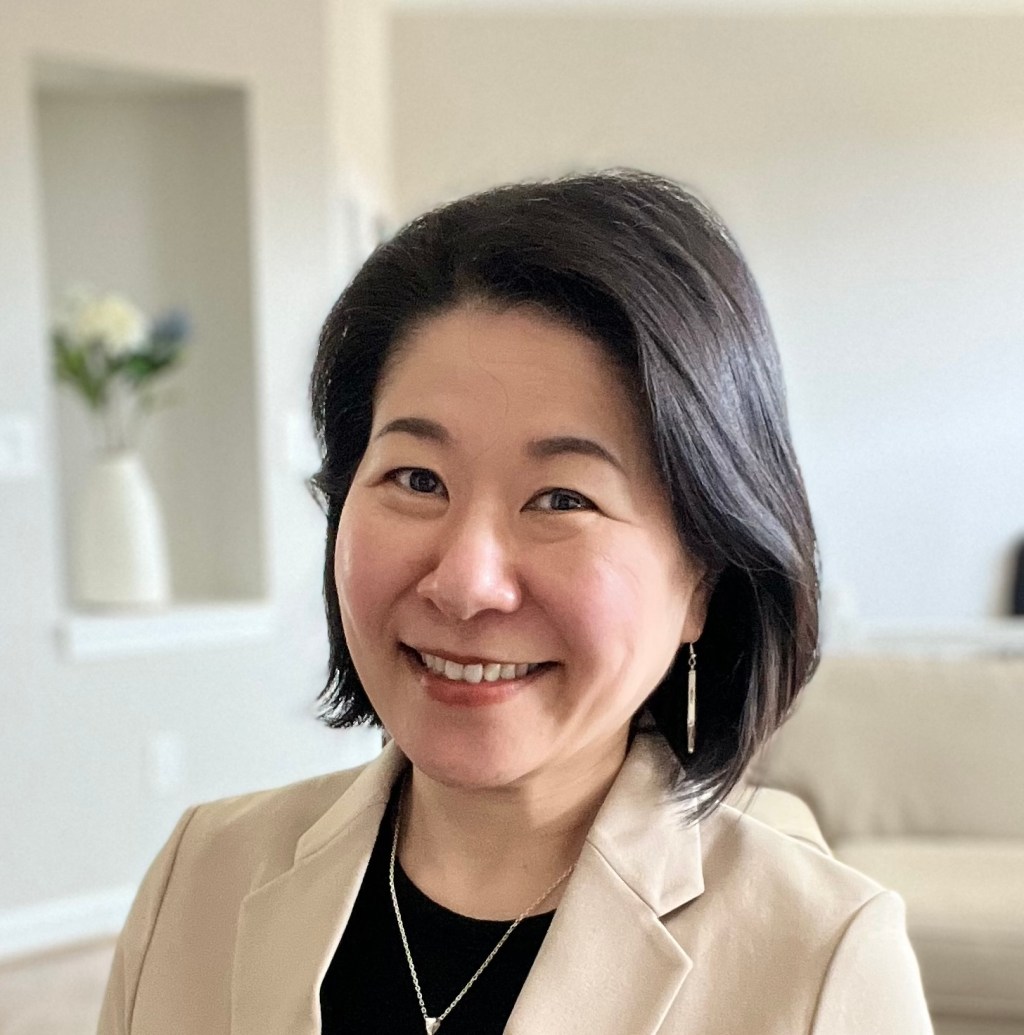
Interview in English with exchange expert Ms. Kazuyo Kato. Some key takeaways:
- Despite disruptions to trade stemming from the Trump administration’s tariffs and other disruptions, healthy exchange between the U.S. and Japan continues on a people-to-people level
- Faith in America has dropped in Japanese polls, but there is hope the relationship will be supported by the strong foundation of cooperation built over many years
- Challenges for Japan include multicultural coexistence and creation of a healthy aging society
- JCIE efforts are effective because, in addition to government stakeholders, they strengthen connections between everyday people and communities in both nations
(See below for her bio, as well as a transcript that has been edited for flow and clarity.)
Kazuyo Kato Bio
Kazuyo Kato is Executive Director of Japan Center for International Exchange (JCIE USA), a non-profit organization founded in 1975 to strengthen U.S.-Japan relations and cooperation on shared challenges through policy dialogues and exchange programs. For over two decades she has been working in both countries at organizations dedicated to U.S.-Japan relations and international affairs.
Before joining JCIE USA in April 2021, Ms. Kato served as Senior Director of Global Partnerships & Initiatives at Japan Society in New York. Prior to that, she worked for over five years at the Sasakawa Peace Foundation USA in Washington, D.C., where she last served as Director of Programs and Administration and developed delegation and outreach programs on U.S.-Japan relations. Ms. Kato also worked for the U.S.-Japan Exchange Program at Sasakawa Peace Foundation in Tokyo (2010–2014); the International Security Program of the Center for Strategic and International Studies (CSIS) in Washington (2003–2007); as well as international consulting firms including Armitage International.
Ms. Kato graduated from Stanford University with a BA in International Relations and an MA in International Policy Studies. She is a Cohort V member of the program called “Maureen and Mike Mansfield Foundation U.S.-Japan Network for the Future,” and a member of the U.S.-Japan Council.
– – –
(Kafatos): JCIE is involved in so many exchange activities between the U.S. and Japan. Could you tell us about your organization and your particular work duties?
(Kato): I represent JCIE USA, which is a U.S.-based nonprofit with staff in D.C. and New York, and a partner organization in Tokyo with the same name. We really work as conveners because we bring together current and future leaders in the U.S. and Japan, particularly those who can impact policies in the two countries. We try to provide them with a platform to have dialogues on issues of mutual interest and concern, whether it’s domestic, regional, or global issues.
Our goal in the short term is to facilitate mutual learning and building of knowledge, hopefully sparking insights for effective policies and practice. In the long term, it’s really about building the future foundation for U.S.-Japan cooperation.
Some of our programs have a thematic focus, like promoting global health, democratic governance in Asia, healthy and active aging, and women’s leadership. In other programs we focus on specific groups of Americans directly involved in policymaking, people who may not be too familiar with Japan or U.S.-Japan relations. For example, we have been organizing study tours in Japan for bipartisan delegations of U.S. Congressional staff since 1982. The goal is to introduce them to a range of Japanese experts to deepen their understanding about Japan and the bilateral relationship.
As for my day-to-day job duties, I manage this small nonprofit and my duties range from program work to various administrative functions.
“I find the relationship to be healthy at that level.”
Kazuyo Kato, on grassroots relations between the U.S. and Japan
(Kafatos): The U.S.-Japan relationship has changed in ways that were difficult to predict even five years ago. What is your general assessment of the overall health of the U.S.-Japan relationship as it stands today?
(Kato): You said the relationship may be changing in ways we couldn’t have predicted five years ago. It may seem like that when we focus on the current headlines, such as the U.S. decision to impose tariffs and how trade relations with U.S. allies are being managed in untraditional ways.
But when we look more broadly at what forms the foundation of U.S.-Japan relations, which is what JCIE is trying to strengthen, when we look at it beyond what is happening at the national and political level – the cultural and societal ties, the people-to-people ties, and the economic ties established through Japanese investments – those ties are very strong and healthy. I don’t think they will be easily dismantled by national political developments.
Looking within the U.S., compared to when I was in Washington, D.C. in the late 1980s or San Francisco in the late 1990s, it’s really remarkable how Japanese culture and cuisine have become a staple in American culture. I can sense genuine appreciation for Japanese culture and society, and I don’t think that appreciation has been impacted by what is happening at the national level today. That feeling was greatly reinforced last week when I attended the annual conference of the National Association of Japan-America Societies, where I saw a community of like-minded people supporting this relationship at the grassroots level. I find the relationship to be healthy at that level.
“In Japan there has been a very quick decline in America’s image and reputation.”
Kazuyo Kato
That said, I do foresee some impact from what is happening today, and I’ll mention two developments. One, there are a number of Americans with deep expertise working in areas like we do – development assistance, public health, women’s empowerment, democracy assistance overseas, etc. – and they have been great counterparts to work with. However, they recently lost their place to apply their expertise, what with U.S. federal funding going elsewhere. So I do think there is a need for us to find ways to continue to leverage this American talent to strengthen U.S.-Japan cooperation.
The second impact I am seeing from recent developments is in Japan. In Japan there has been a very quick decline in America’s image and reputation, based on recent polls I’ve looked at by Pew Research Center and others, and that’s unfortunate. My hope is that public sentiment can rise and fall easily, so we’ll just have to see if this has any significant long-term implications. But these are two things I have been paying attention to recently.
(Kafatos): As someone who has one foot in each culture, what do you think are some of the major societal developments in Japan that are particularly noteworthy? Perhaps related to this drop in America’s image. What do you think people should know about how Japan today has changed?
(Kato): I can start with two developments, the first being societal and not a surprise to most people. What we are paying attention to is demographic changes because these have implications for Japan’s future economic vitality and societal stability. In 2009 the Japanese population peaked at 126.6 million and it’s been dropping ever since. Just in 2024 Japan lost 900,000 people.

That also means 1 in 3 adults in Japan are now 65 or older, so it’s a super aging society. Obviously this requires Japan to think about offering affordable and high-quality care for the aging population, how to keep them productive members of society, and so forth.
And, related to the first, we’re also paying attention to the rapid increase in foreign residents in Japan, who I think are needed to make up for the lost population. In 2024 the number of foreign residents were 3.77 million, which is still only 3% of the total population, but it did increase by more than 10% in just one year. And the number of foreign residents tripled in the last decade, so you can get a sense of the increase.
The problem is, the support system has not caught up with this trend. Foreign residents in Japan are struggling with issues like low wages, poverty, Japanese language difficulties, social isolation, and providing adequate education for their children. These issues really need to be addressed in order to successfully integrate foreign residents into Japanese society, without causing the kinds of cultural clashes seen in other countries. That is one challenge I pay attention to. There are many Japanese NPOs actually working to fill the gaps in Japan’s support system. I have been following this because we have a project right now interviewing such NPOs to identify their needs, and to see how they’re trying to address the challenges.
The second development is related to young people in Japan. There is this sense of a lack what we call political efficacy, and it’s sort of related to the weakening of the ruling coalition. Japan has a “silver democracy,” where older voters are a larger and more influential voting bloc. Young people just don’t feel like they can have their voices heard and influence government decisions.
“Foreign residents in Japan are struggling with issues like low wages, poverty, Japanese language difficulties, social isolation, and providing adequate education for their children.”
Kazuyo Kato
JCIE also has a program looking at the state of democracy in Asia, and when we did a survey of young people in the region, of the ten countries surveyed, Japan stood out as an outlier where young people feel their votes don’t matter in elections. This needs to change. We have been engaging Japanese youth leaders to raise their awareness as important stakeholders of democratic governance. These are the two societal trends we’re paying attention to these days.
(Kafatos): What would you say to Japanese folks who are looking at the U.S.? What are some societal developments in America they should be keeping in mind?
(Kato): I think it’s no surprise we’re seeing a great divide within the U.S. between the extremes of the so-called liberals and conservatives, with middle-of-the-road people having difficulty finding politicians who represent their views. And, to me, it seems like without a strong leader who can bring those two sides together and find the middle ground, the country could continue to swing from left to right.
I think the Japanese have been observing this for the past decade, and that could ultimately undermine U.S. credibility and reliability as a partner among its allies and friends. I think that might be the reason this confidence in America’s ability to sustain a stable society and be a stable partner is being questioned. That’s probably being reflected in those polling results.
(Kafatos): You mentioned this disenchantment in Japan with the silver democracy. Do you think this is related to these new political parties coming to challenge the LDP, which has been in power for so long?
(Kato): Yes, I think there’s been long-standing discontent with how the country has been managed by the ruling coalition, especially the LDP, and so there is some reflection of that. But I see it more as dissatisfaction with the status quo and established elites rather than the silver democracy. There is mistrust, as if there’s some sort of deep state managing the country without heeding the people’s interests.
(Kafatos): That’s very interesting. Discontent with established elites, and this idea of a deep state, has been one of the drivers of political change in the U.S. as well.
(Kato): Yes, but I do want to say I think in both countries the biggest trend in the last decade or so has been the rise of social media. I think social media really had an impact in bringing marginal or extreme voices to the forefront and creating a larger divide than I used to see. So, yes, there are voices of discontent, but in Japan’s case especially I think those voices are still marginal, although now they’re more easily heard. People get information and can communicate on more platforms than we used to have.
(Kafatos): Prime Minister Ishiba said the Status of Forces Agreement with the U.S. is basically unfair. This was in the context of talking about how the U.S. military presence in Japan has helped Japan’s security, but also made Japanese less able to defend their own country. Some think he really captured the feeling of many Japanese people when he said the relationship isn’t fair. Do you think the U.S.-Japan relationship is one of equals?
(Kato): No, but I wouldn’t say it’s unfair. It may be unequal or asymmetrical, but I would characterize it more as complementary in terms of the roles in the alliance. The U.S. offers its power projection capability to defend Japan, while Japan hosts the U.S. bases to make that possible.
The word “unfair” probably is effective in tapping into this existing sentiment or dissatisfaction among some in the Japanese public that, somehow, the U.S. is overpowering or exploiting Japan. But the reality, whether one likes it or not, is that the United States’ status as a superpower necessitated the current arrangement. And in that sense, I don’t think the relationship has necessarily been equal between the U.S. and many of its partner countries, as seen in Europe.
So if Japan wants to increase its defense spending to change the status quo, which it has decided to do, I think that’s great for Japan, and natural for a normal country to do. But I don’t think the alliance can be characterized as unfair until Japan develops independent capacity or capabilities to defend itself without relying on the alliance.
“I worry about political developments painting an overwhelmingly negative image of America today.”
Kazuyo Kato
(Kafatos): The core foundation as to why the U.S. bases exist in Japan seems to be changing. In the past there was this idea that, in exchange for protection, Japan will host the bases in line with the national security interests of the United States. But now it feels like there’s this more transactional dialogue. It’ll be interesting to see how Japan’s defense posture will change going forward.
(Kato): There’s always that discussion about Article 9 of the Constitution, but revising it requires a huge step. The government and the people of Japan have a lot to consider.
(Kafatos): You have summed up how there are these big shifts happening both in the U.S. and Japan. What are your biggest concerns about the U.S.-Japan relationship going forward?
(Kato): I kind of worry that the current political developments at the national level in the United States are overwhelming the image of America among the Japanese public. There are plenty of Americans who do not agree with the way things are going in the country today. So, when I see polling results like we discussed earlier, it’s unfortunate because there are still a lot of Americans who, just like before, are trying to build close ties with Japan based on our shared values. I worry about political developments painting an overwhelmingly negative image of America today.
In the short term, I do wonder how the $550 billion that Japan is supposed to offer the U.S. is going to be settled, and how that can truly become a win-win arrangement. I worry about that because it’s a huge amount of money.
As for my hope, I do hope that we can continue to rely on the people-to-people, community-to-community, society-to-society foundation that exists. And that we can rely on those foundations to weather the storm.
“JCIE is going to double down on… subnational diplomacy… to connect with the people who understand the impact of Japanese investments.”
Kazuyo Kato, on how much Japan invests in the U.S.
(Kafatos): Maybe some of the dissatisfaction in Japan that you mentioned has something to do with giant numbers, like $550 billion. Japan doesn’t always get credit for all the high-quality, high-paying jobs in the United States that are a direct result of Japanese investment. Perhaps experts on the Japanese side should do a better job of highlighting those long-standing and enduring contributions made to the United States.
(Kato): Yes, yes, I think so. Americans on the ground also know that. And what JCIE is going to double down on in this current political climate is really this building of state-to-state diplomacy, or subnational diplomacy as our community likes to call it. To connect with the people who understand the impact of Japanese investments and ties to Japan, and how they benefit their community. So we’re going to try to build on those ties to continue to strengthen the relationship.
(Kafatos): Do you have an example of this kind of subnational diplomacy effort?
(Kato): In 2023 one of our staff members initiated and developed this U.S.-Japan program on healthy and resilient aging. It’s a great example of an issue that is nonpartisan, and that everybody can agree is of mutual interest.
What we did in that program is connect Americans and Japanese who are leading the development of age-friendly communities at the local level. We connected people in Columbus, Ohio with people in Kanagawa Prefecture. They did one round of exchanges between 2023 and 2025 and, thanks to the Japan Foundation, we will get to do another round of exchanges with a new set of communities. Our tagline is, “Aging is a universal experience!”
(Kafatos): You alluded to a storm we’re going through. What would you say makes you hopeful about the U.S.-Japan relationship?
(Kato): I grew up in the U.S. and Japan, and I adopted the values both countries have worked so hard to defend. Because of that experience, I have become a better person. I feel those values still exist in both countries, and there are people who support them. I am hopeful that we can rely on those people and communities.
(Kafatos): That’s that strong foundation you mentioned earlier, the one that underpins the U.S.-Japan relationship. We look forward to seeing what new programs you push forward with, and we wish you all the very best.
(Kato): Thank you so much. We need that encouragement. We really appreciate it.
– – –
Those interested in helping JCIE USA strengthen the U.S.-Japan relationship can donate or contact their U.S.-based offices. And for more information on Kazuyo Kato and her many achievements, visit the official website of JCIE USA. The Japan Lens thanks Ms. Kato for her valuable time and insights.
Photo 1: Profile photo of Ms. Kazuyo Kato.
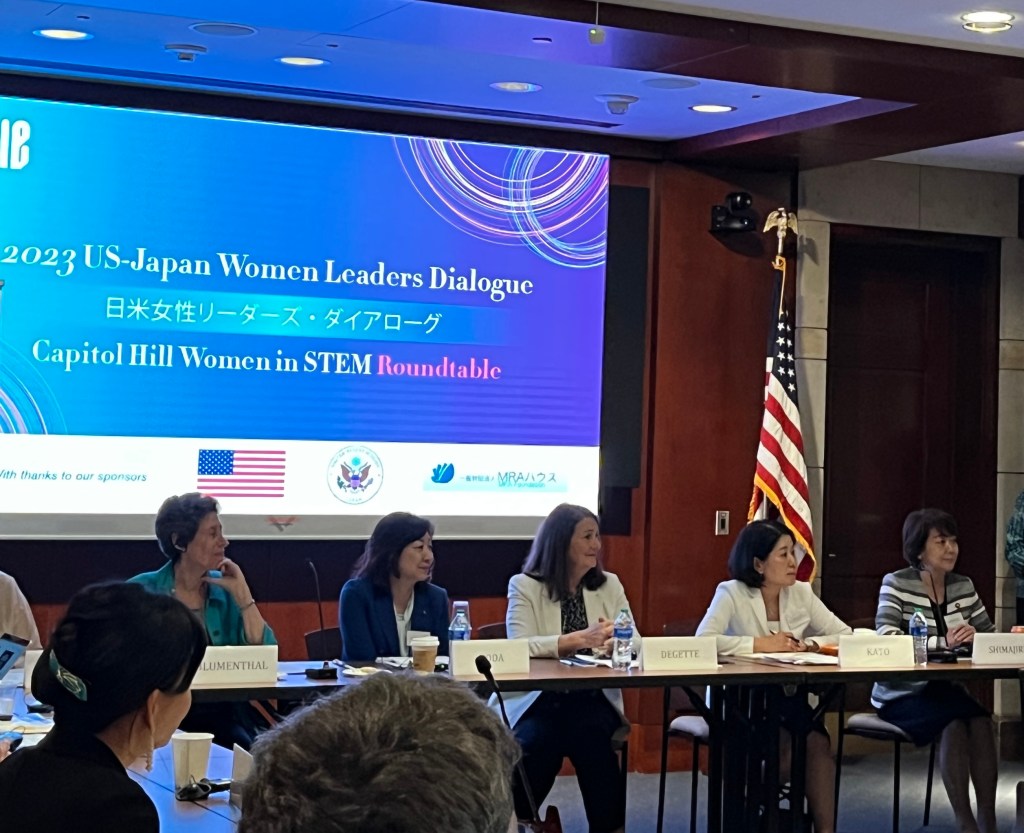
Photo 2: Kazuyo Kato, second from right, at the Women Leaders Dialogue in Washington, D.C. (Sept. 2023).
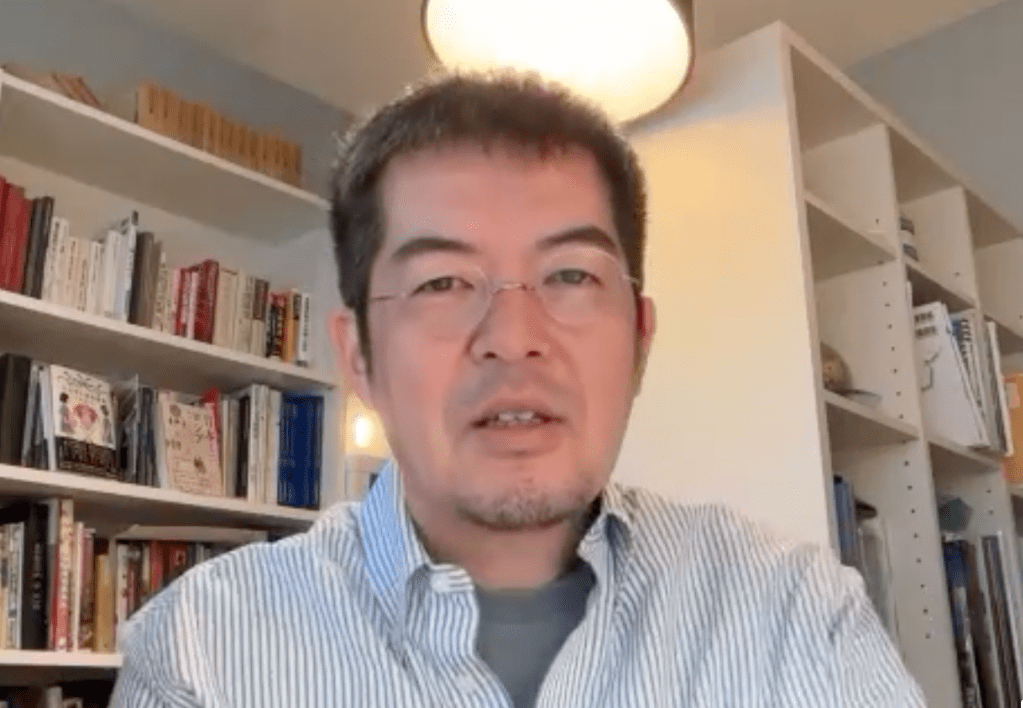
Photo 3: Kazuyo Kato speaking with the Japan Lens (Aug. 2025).
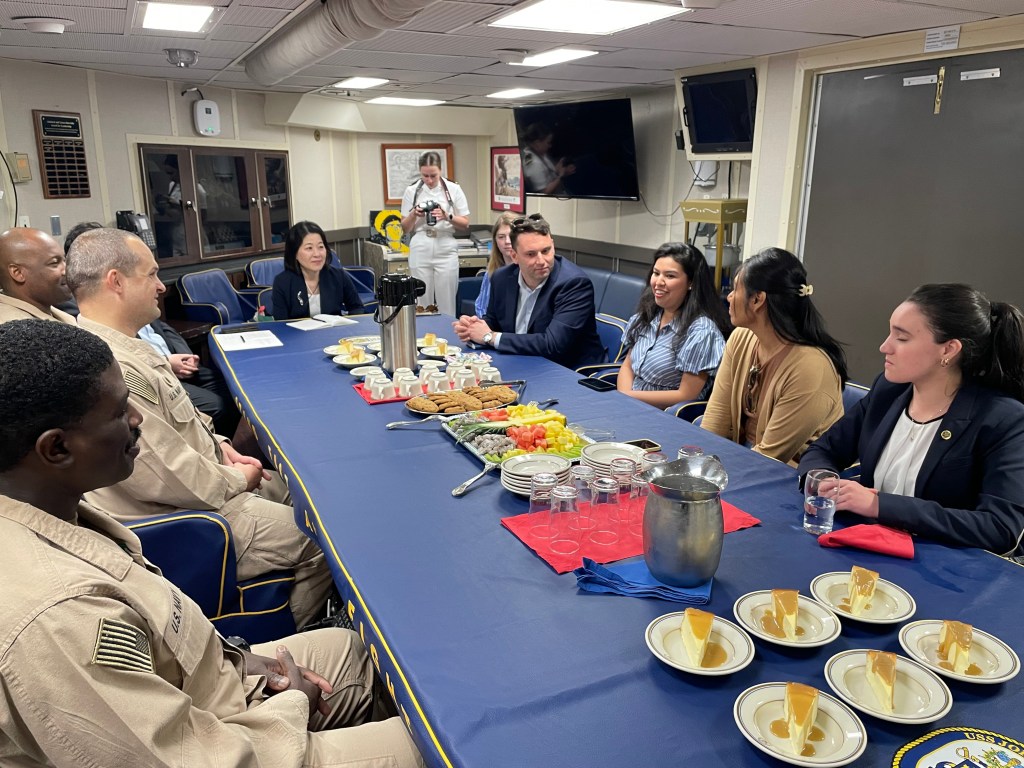
Photo 4: Kazuyo Kato, seated at head of table, accompanies U.S. Congressional delegates on a trip to Yokosuka Naval Base (May 2025).
No artificial intelligence or machine translation programs were used in the creation of this post.
 The Japan Lens
One response to “Interview with Kazuyo Kato: U.S.-Japan cultural ties still “strong and healthy” but America’s image has taken a hit”
[…] (インタビューの英語原稿はこちらへ。) […]
LikeLike