
In addition to being a lead researcher at the Canon Institute for Global Studies (CIGS), Prof. Minemura Kenji is also a senior research fellow at the Public Policy Research Center at the University of Hokkaido. Prof. Minemura researches many subjects, especially U.S./China security policy and policy simulations (i.e., design/execution of mock exercises).
He also studied the book The China Dream written by Liu Mingfu of the PLA National Defense University. In fact, given Liu’s great influence on the ideology of President Xi Jinping, Minemura decided to translate it from Chinese into Japanese. Based on all this and more, Prof. Minemura is known for his deeply insightful analysis on both the U.S. and China. In February we wrote about his “China’s maritime blockade of Taiwan” scenario.
(This video of the interview is in Japanese, but an English transcript of the discussion follows below.)
– – –
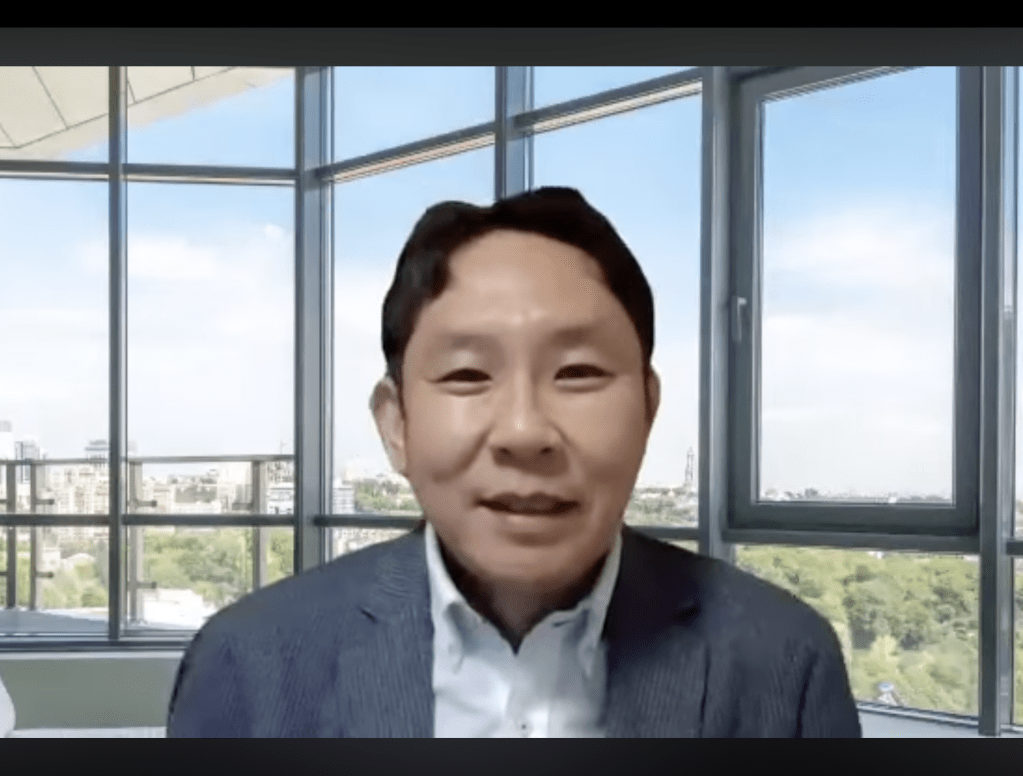
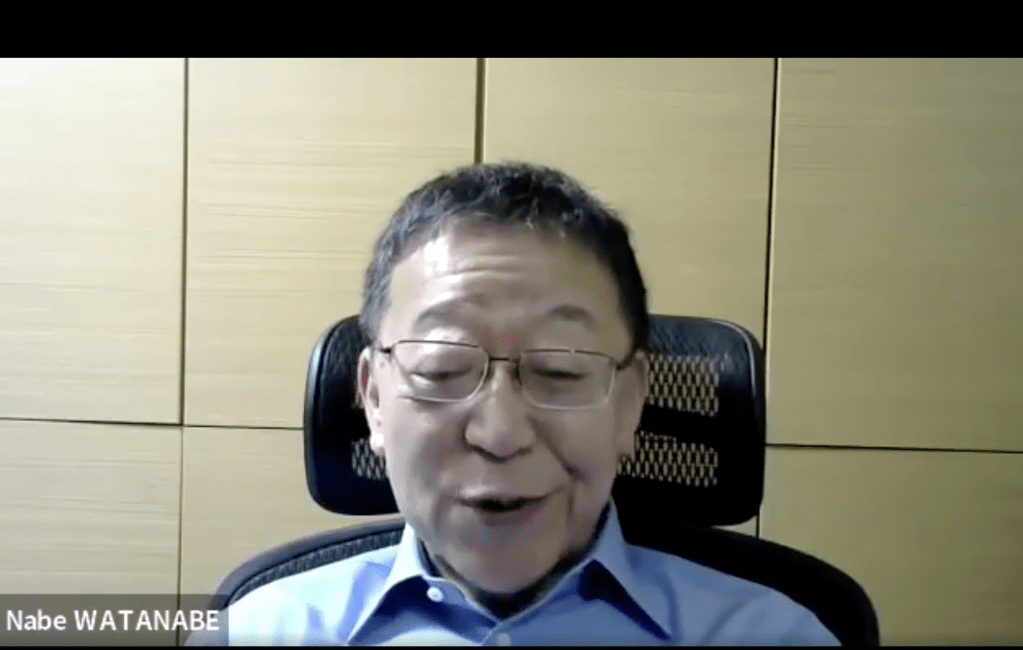
(Kafatos): In the February issue of Bungei Shunjū you wrote an article titled “The 2025 Maritime Blockade Scenario.” In it, you explained how China will use gray zone tactics* to forcefully unify with Taiwan. Six months have passed since then. Has there been a change in China’s course, something people should be made aware of?
(Minemura): Zero change. The scenario I described is happening in the real world, as I predicted. I only presented a portion of my scenario in the Bungei. There are more details to it but the key point is this: the Chinese government has started boarding ships, not just using naval vessels but (non-military) government ships as well. In other words, it’s engaging in law-enforcement activities based on the One-China Principle, and treating Taiwan as part of its territory. This started in earnest on February 19. A Taiwanese tour boat was stopped and boarded by the Chinese Coast Guard. That became the starting point, and more and more Chinese coast guard ships are expanding their patrols out towards Taiwan.
Also, William Lai was elected president of Taiwan. Two days later, China conducted large-scale drills around Taiwan. It wasn’t just naval ships but also coast guard ships passing through the Taiwan Strait and patrolling on the east side of Taiwan. So, the simulation I came up with is starting to unfold in the real world.
(Kafatos): When the U.S. military contemplates conflict with China, there seems to be a tendency to emphasize asset comparison, such as “How many aircraft carriers do we have to theirs?” In The China Dream, the author says the Chinese military cannot beat the U.S. military yet, so it is preferable to avoid conflict. If that’s the case, and China intends to use non-combat/gray zone tactics, then what can the U.S. do to prevent that?
(Minemura): I specialize in both the U.S. and China and have spent about the same amount of time in both countries researching. I’m neither American nor Chinese, and – from a third-person perspective – I feel these two countries fundamentally don’t understand each other. This gray zone matter has finally started garnering attention in America. That said, the U.S. has the world’s strongest military, and many Americans tend to see things as black or white, especially military people. When I explain this gray zone scenario to Americans, it doesn’t tend to land. They reply with comments like, “Let’s not talk about vague what-if scenarios. Let’s talk about what kind of missiles they have.”
“One of the main themes in the censored portions was this: Chinese unification with Taiwan must be achieved without casualties.”
Prof. Minemura Kenji
And what about China? The basis of their thinking aligns with Sun Tzu’s Art of War: “To win without fighting.” This is a method they’ve been working on for over 2000 years. Unlike the American way, which is to overwhelm the enemy with sheer firepower, the Chinese intend to use intellect in this fight. They want to minimize losses and casualties to the greatest extent possible.
Liu Mingfu, Xi Jinping’s mastermind, has written two books, The China Dream and The Strong Military Dream. The latter was published in China in 2020. The original manuscript was 600,000 characters long but the censors deleted much of it; they only allowed 230,000 characters to be published. I managed to obtain the censored portions, translate them into Japanese, and publish it all as a book. One of the main themes in the censored portions was this: Chinese unification with Taiwan must be achieved without casualties. But it’s not just about sparing human life. They also want to minimize damage to Taiwanese infrastructure and society. I created my scenario based on Liu’s book.
At CIGS we’ve done two gray zone simulations based on my scenario. We had Diet members, former Cabinet officials, and various officials participate in the drill. We broke people into Taiwan, Japan, and U.S. teams. I served as both controller and China team lead. What was the result? Everyone really struggled. They concluded it will be extremely difficult to break through such a gray zone scenario. Why? If the Chinese navy conducted a naval blockade, that would be an act of war. In that case, it’s easy. You just overwhelm them with U.S. military power.
But what if the PRC doesn’t use naval vessels? What if, instead, they use official non-military vessels for “domestic boarding” operations, somewhere in the vicinity of Taiwan? What happens when they assert the One-China Principle and treat Taiwan’s territorial waters as their own? Then it’s a whole new ball game. If you were to, say, attack such a ship then you would be committing a preemptive attack. So what we found is the Americans won’t be able to easily break a non-military blockade.
I’ve been to the U.S. twice to discuss this with the relevant authorities. I have yet to encounter someone with an effective countermeasure to this gray zone tactic. That’s why I think there is a good chance China will move forward with this scenario.
(Kafatos): The former Commandant of Japan’s Ground SDF (Self-Defense Forces) western section is Motomatsu Takashi. He said the phrase “a Taiwan crisis is a crisis for Japan” has two meanings. In Taiwan, they interpret it to mean Japan will come help if something goes down. But in Japan, it seems people use it to mean minimizing the fallout hitting Japan in such a conflict. Can the SDF really go and help Taiwan? Or will they just back up U.S. forces?
(Minemura): When former Prime Minister Abe first said, “A Taiwan crisis is a crisis for Japan” in 2021, I received half the copyrights to the phrase. In fact, I was advising PM Abe personally about diplomacy and U.S.- China relations. I showed him my scenario and the blockade model on a map, and explained how a Taiwan contingency would affect Japan’s sea lanes. Hearing all that, PM Abe said, “So a crisis in Taiwan is a crisis for Japan” as he jotted notes with a red pen. That’s where the phrase got its start.
PM Abe strongly felt that, if a crisis occurred in Taiwan, Japan’s logistics and supply chains would be disrupted by the conflict.
“The Chinese government has started boarding ships, not just with naval vessels but (non-military) government ships as well. …it’s engaging in law-enforcement activities based on the One-China Principle, and treating Taiwan as part of its territory.”
Prof. Minemura Kenji
After that, PM Abe said those famous words during a speech at a Taiwanese think tank, and the whole world started paying attention. He himself added the phrase “…and it’ll also be a crisis for the U.S.-Japan alliance.” That’s probably why the narrative started spreading that the SDF would charge in with U.S. forces if something went down. But originally, when I was advising PM Abe, the point I emphasized was this: “Japan’s sea lanes will be affected. This isn’t just someone else’s problem.” PM Abe truly understood this point.
Still, I think his words may have given certain people in Taiwan excessive hope about Japanese involvement. Look at surveys in Taiwan. One says 58% of respondents think “Japan will likely send the SDF if a crisis occurs in Taiwan.” Who’s more likely to come, U.S. or Japanese forces? They think Japanese. And when I’ve discussed this with people in Taiwan, I sense they have very high hopes for what Japan will do for them. But the reality is that Japan is limited by its constitution in terms of what it can do militarily. And it’s pretty difficult to imagine the SDF fighting alongside U.S. forces near Taiwan. They will primarily handle logistics, and protect Japanese territory and U.S. bases.
The Japanese government needs to do a better job of explaining this fact to the people of Taiwan. If they don’t, and the SDF fails to join the fight in a contingency, people in Taiwan will feel incredibly let down by Japan. I think in general – about all matters – Japan and Taiwan need to collaborate and communicate better.
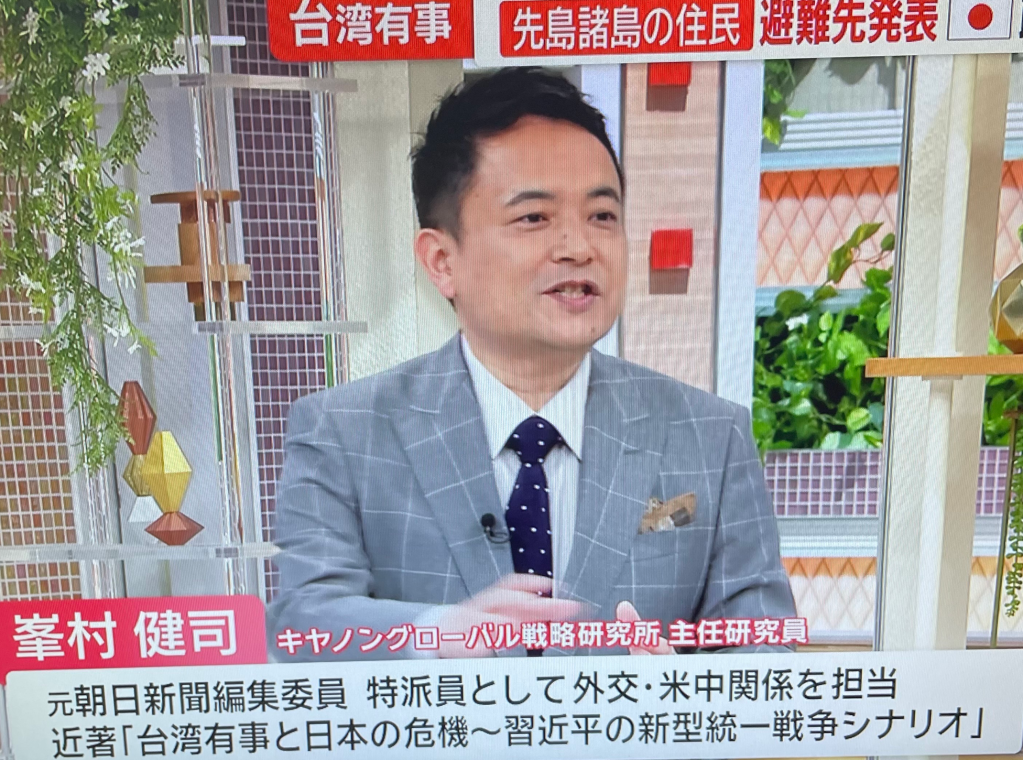
I should note, until pretty recently, use of the term “Taiwan crisis” in Japan was considered off limits. I remember in 2020, when I first wrote about this contingency scenario in the monthly Bungei, I went on TV programs to explain it. Suffice it to say, I was harshly criticized. People said I was fanning the flames of a crisis.
And when I was invited to talk at the LDP or government offices, they would tell me, “Hey, this term ‘Taiwan crisis’ is kind of sensitive so please don’t use it.” It’s only become acceptable to discuss in the past three or four years. The result of this lack of protracted public dialogue is what we have now, which is we’re simply not ready to deal with a potential Taiwan crisis.
(Kafatos): Given it’s no longer taboo to talk about in Japan, is this a sign that perceptions are changing about their country’s role in defense matters?
(Minemura): Yes. What first broke the taboo was PM Abe’s comment about a Taiwan crisis. In a way it was like Admiral Davidson’s speech in 2021 at the congressional hearing in Washington, where he raised the alarm about a Taiwan contingency. PM Abe’s words in 2021 had a similarly big impact here in Japan, and it helped kick-start the conversation.
There was also another occurrence in February 2022, namely, Russia’s military invasion of Ukraine. That was a game-changer, too. Seeing gruesome images of war really hit home with people. It made us aware of the realities of war again. These were the two big occurrences by which Japanese started gaining a sense of crisis, and increasing their awareness of a possible Taiwan contingency.
(Kafatos): In the April joint statement released at the U.S.-Japan summit, the leaders included a plan to strengthen command and control between the two militaries. If they achieve this, will it result in a shift away from the traditional “SDF as shield and U.S. military as spear” paradigm?
(Minemura): From the standpoint of deepening the alliance, I think it’s very positive. As for whether it will change the shield-and-spear paradigm, I think essentially it won’t. But we can hope for an even closer relationship. There haven’t ordinarily been any joint Japan-U.S. commands except temporarily, such as in response to the Great Tohoku Earthquake of March 11, 2011. We need a joint command. In order to stand strong against the China’s rapid militarization, it’s absolutely crucial to strengthen the Japan-U.S. relationship.
Also, what tends to get overlooked about the summit is that it was a trilateral. It was so important having the Philippines there. When talking about a Taiwan contingency, people tend to focus on the Taiwan Strait. But, in fact, the Bashi Strait is another important sea lane. If this were to be compromised then the shipment of Japan’s goods would be gravely affected. That’s why I think it’s a really big deal that we had the three nations – Japan, the U.S., and the Philippines – all collaborating together.
In order to deter China, it will be vital to have the Philippines in the mix. With only the U.S. and Japan, we can draw a line of deterrence of sorts. But by having the Philippines and then Australia as part of the solution, it becomes much more of a solid and unified front. This will be incredibly effective in deterring China.
– – –
(This concludes Part 1 of the interview. The original Japanese transcript is here. Next week we will post Part 2.)
*Gray zone tactics are those falling short of an all-out invasion or declaration of war. They involve leveraging all assets to sow discord, disrupt the enemy, and make them lose the will to fight. Examples include cyberattacks on infrastructure, spreading false information online, and – now – using non-military ships in a quasi-military fashion. For more information, see this description provided by the Center for Strategic and International Studies (CSIS).
 The Japan Lens
4 responses to “Interview with Minemura Kenji: The Taiwan contingency scenario (Part 1 of 2)”
[…] PRC sends ships all over the region to press territorial claims, and for years it has been using gray zone tactics against Taiwan not to mention […]
LikeLike
[…] disagrees with the notion that the PLA will attack Taiwan in a Normandy-style invasion. He claims the Chinese will instead take Taiwan with gray zone tactics. He says their plan hinges on keeping the U.S. military out of the […]
LikeLike
[…] Part 1 of the interview, Prof. Minemura explained why working together with partner nations is so crucial. […]
LikeLike
[…] 1はここまでです。Part 1の英もあります。次回Part […]
LikeLike