Interview with Sonoda Kōji of The Asahi Shimbun. Some key takeaways from our discussion:
- Japanese foreign policy is being changed to suit U.S. President Trump
- Japan’s international credibility could be harmed by closeness to U.S.
- The U.S. should not take the alliance with Japan for granted
- Lack of honest communication between Tokyo and Washington harms the alliance
See below for Mr. Sonoda’s bio and transcript of the interview, which has been edited for flow and clarity. Click here for a synopsis in Japanese.
Sonoda Kōji Bio
Sonoda Koji is Senior National Security Correspondent at The Asahi Shimbun news corporation in Tokyo. A journalist with more than 25 years of reporting experience, he specializes in Japan’s national security, defense and foreign policy, and U.S.-Japan relations. He has extensive experience covering policymakers and government officials in both Tokyo and Washington.
As Deputy Editor-in-Chief of the Political News Section, Mr. Sonoda supervised coverage of the Prime Minister’s Office for four years. Prior to that, he was based in Washington, D.C. as an accredited correspondent covering the White House, the State Department, and the Pentagon. His beat covered U.S. foreign policy, national security, and domestic politics, including the 2020 presidential election. He also covered major international summits, including meetings between U.S. leaders and their Chinese and North Korean counterparts.
In Tokyo Mr. Sonoda covered the Prime Minister’s Office, the Liberal Democratic Party, the Ministry of Defense, and the Ministry of Foreign Affairs. Mr. Sonoda holds a Master’s of International Public Policy (MIPP) from Johns Hopkins SAIS, and he was an Associate of Harvard University’s Program on U.S.-Japan Relations from 2015 to 2016.
He also writes Kōji Sonoda’s “Deep Insights on Diplomacy & Security,” a newsletter published by The Asahi Shimbun.
– – –
(Kafatos): Could you tell us about your career path and what stories you are covering these days?
(Sonoda): I was born in Miyazaki Prefecture and moved to Tokyo for university. My interest and relationship with the U.S. started when I was an exchange student at the University of Oregon, where I studied journalism. I lived in Eugene in the mid-1990s, when the influence of hippie culture was still quite visible. That is where I gained a deeper understanding of American society and culture.
I joined The Asahi Shimbun in 2002 as a crime reporter before moving to the political news section. In 2007 my beat included the Prime Minister’s Office and the ruling Liberal Democratic Party. Then in 2018, I was assigned to work at the Washington, D.C. Bureau, where I covered American politics for four years.
There are two major events I covered that are still vivid memories from my time in Washington. The first was the U.S.-North Korea summits in Singapore and Hanoi. Covering both those summits on-site allowed me to become a first-hand witness to the dynamism of diplomacy.
The second was the January 6th insurrection at the U.S. Capitol. It was like watching a revolution unfold. Rioters were carrying out destructive acts inside the Capitol, and I felt like I was touching a moment of history directly with my own hands. I wanted to understand why such a major event had occurred. In the aftermath, I interviewed people involved in the riot, including members of the Trump campaign and Proud Boys. I published a book in Japanese analyzing the event in-depth.
My expertise is Japanese politics, U.S.-Japan relations, and Japan’s national security policy. My recent focus is Japan’s defense build-up, including its effort to strengthen cutting-edge technologies, such as A.I. and drones.
“Her version focuses more on economic security rather than the rule of law.”
Sonoda Kōji, on why PM Takaichi has changed Abe’s concept of the Free and Open Indo-Pacific (FOIP) to suit the Trump administration.
(Kafatos): Let’s talk about the Free and Open Indo-Pacific concept, or FOIP. You have said there’s a new FOIP emerging in Japanese policy. Could you tell us how it differs from what was originally envisioned by Abe Shinzō?
(Sonoda): Abe first introduced FOIP at the Tokyo International Conference on African Development (TICAD) in 2016. Abe was always thinking about how to deal with the rise of China, which was accelerating efforts to change the status quo by force in the East China Sea and South China Sea. Abe sought to strengthen cooperation with allies and like-minded countries, especially hoping to leverage the power of India.
Abe’s FOIP emphasized democratic values such as the rule of law, freedom of navigation, and free trade. By emphasizing these concepts, Abe tried to bring democratic states together while drawing a clear contrast with China. One of Abe’s most important contributions through FOIP was linking the Pacific Ocean and Indian Ocean into a single strategic space. Later, this linkage led to the establishment of the Quad, a strategic dialogue between the U.S., Japan, India, and Australia.
Another important point is that FOIP became a globally influential concept because the U.S. adopted it as part of its own strategy. The first Trump administration was searching for a new concept to replace the Obama administration’s “Pivot to Asia.” That is why the first Trump administration embraced FOIP, which never would have become such a significant international movement without U.S. support.
Now let’s consider Prime Minister Takaichi’s FOIP as it changes today. Her version focuses more on economic security rather than the rule of law. It highlights the importance of supply chain resilience in areas such as A.I., semiconductors, critical minerals, and energy.
The biggest reason for difference between the two is the influence of the second Trump administration. They have a strong interest in emerging technologies and critical mineral supply chains, but considerably less interest in promoting the rule of law. From Tokyo’s standpoint, the U.S. is Japan’s only security treaty ally so they cannot afford to disregard the Trump administration’s preferences. Also, FOIP has little strategic value without U.S. support. This is the reality of power politics.
That is why Takaichi’s FOIP differs significantly from Abe’s. The focus is more on economic security rather than the rule of law.
“Tokyo fears President Trump’s unpredictability.”
Sonoda Kōji, on why Japanese officials are afraid to speak honestly to their U.S. counterparts.
(Kafatos): It seems Tokyo believes Japan’s defense will be compromised if the U.S. is angered, and conversely its stability ensured if the U.S. is pleased. But some in Japan say the old rules don’t apply, and that countries of the Global South are looking for alternative leaders. As Japan becomes a more influential middle power, could its closeness to the U.S. become a liability from a geopolitical standpoint?
(Sonoda): Japan is increasingly reluctant to criticize the U.S. for two main reasons: First, deteriorating relations with China drives Japan to depend more on the U.S. for its national security. Since Japan nationalized the Senkaku Islands in 2012, relations between Tokyo and Beijing have worsened. And after Prime Minister Takaichi’s remarks on a Taiwan contingency in November 2025, relations deteriorated even further. Japan’s reliance on its only treaty ally, the U.S., has increased.
Second, Tokyo fears President Trump’s unpredictability. Japan has been watching uneasily as the Trump administration has launched tariff wars, conducted military operations against Venezuela, and killed Iran’s Supreme Leader. Many senior officials in Tokyo believe that if Trump is angered he could take actions highly detrimental to Japanese interests, even though Japan is a U.S. ally. The deterioration in U.S.-Canada relations is often cited as an example. Japan faces growing security tensions with China, so avoiding friction with its only security ally – that is, maintaining stable U.S.-Japan relations – has become one of Tokyo’s top diplomatic priorities.
Having said that, can close alignment with the U.S. become a liability? In terms of international credibility, the answer is yes.
For example, Japan’s reluctance to criticize U.S. sanctions against President Akane Tomoko of the International Criminal Court (ICC) shows how the current alliance relationship constrains Tokyo’s diplomacy. And disappointment in Japan is not limited to Southeast Asian countries and the Global South. Unfortunately, many like-minded countries in Europe are also disappointed.
But the bottom line is the U.S.-Japan alliance remains vital to Japan’s national interests. Japan is surrounded by hostile countries such as China and North Korea that seek to change the status quo by force. So even if people question Japan’s commitment to the rule of law, Tokyo will have to continue prioritizing the alliance with Washington. That is the reality of the U.S.-Japan relationship.
(Kafatos): The other day there was a summit between U.S. President Trump and Chinese President Xi Jinping. Are you seeing a lot of concern in Tokyo about a G2, where a deal might be struck between China and the U.S. and Japan gets left in the lurch?
(Sonoda): That concern is growing in Tokyo. In Washington they might say such fears are overblown, but there is precedence. In 2013 Xi met with then-President Obama and said the Pacific Ocean is vast enough to accommodate both the U.S. and China. Such statements are very concerning to the Japanese government because it sounds like the emergence of the Group of Two or “G2” concept, one where China wants to divide the Pacific Ocean with the western part for itself and the eastern part for the U.S.
From Tokyo’s perspective, such U.S.-China rapprochement is very concerning. A deal could be made between the two right over Japan’s head.
“The biggest problem is Japan excessively fears abandonment by the United States.”
Sonoda Kōji, on one of the reasons why the U.S.-Japan alliance is not healthy.
(Kafatos): Having covered the U.S.-Japan relationship for 25 years now, do you think the U.S.-Japan alliance is healthy? And what is needed to make the alliance healthier and stronger?
(Sonoda): Well, that is also a really great question. I cannot describe the U.S.-Japan alliance as very healthy because the U.S. is overwhelmingly stronger, and Japan often finds itself unable to voice criticism against the United States. In Japan, some describe the current relationship as one where Japan’s preferences are subordinate to America’s. The biggest problem is Japan excessively fears abandonment by the United States.
A European diplomat I know recently made the same point to me. He said Japanese diplomats worry overly about being abandoned, but they shouldn’t for two main reasons: First, the security dimension. There are about 60K U.S. troops stationed in Japan. That means Japan hosts the largest number of U.S. troops stationed overseas. Second, Japan is also a huge investor in America. Its direct investments in the U.S. totaled more than $800 billion at the end of 2025, making it America’s largest foreign investor. Clearly, the two nations are deeply intertwined in terms of security and economic affairs.
In that sense, the alliance endures not only because Japan needs the U.S. but because the U.S. also needs Japan. That’s why I do not believe the U.S. can easily abandon Japan. When I was posted in Washington U.S. diplomats actually voiced similar opinions to me. One example is Susan Thornton, former acting Assistant Secretary at the State Department, whom I deeply respect. She told me the U.S. is often uncertain about what course to take, and genuinely wants to hear Japan’s views. She argued Tokyo should be more confident in voicing its opinions to Washington. I think she’s right. Japan needs to recognize its own value in the alliance more objectively, and engage in candid discussions with the U.S. more confidently. The quality of the alliance could be improved through more honest communication.
“The NIB must be able to analyze intelligence objectively, and even provide information the prime minister may not want to hear.”
Sonoda Kōji, on why Japan’s new spy agency must remain apolitical.
(Kafatos): In July the Takaichi administration launched Japan’s first postwar spy agency, the National Intelligence Bureau. You said in one of your articles that national security and intelligence officials in Japan should learn from U.S. mistakes, such as the now-debunked claim in 2003 that Saddam Hussein had weapons of mass destruction. Is one of your greatest concerns the politicization of intelligence?
(Sonoda): It is. When I was working in D.C. I interviewed a former aide of Secretary Colin Powell, who spoke in detail about how and why U.S. intelligence agencies made this big mistake in 2003. I think Japan should learn from those mistakes.
Japan has five intelligence-gathering agencies, but compared to the U.S. they are still in the development and learning stage. The NIB was established to play the role of central intelligence coordinator for these agencies. The NIB’s precursor was the Cabinet Intelligence Research Office – called CIRO – housed in the Prime Minister’s Office. It served as a dedicated intelligence-gathering body for the prime minister, but was in danger of being politicized. Now it’s been upgraded to the NIB, and the most important thing is for it be apolitical, especially with how it gathers and assesses intelligence.
In the past, such as during the Abe administration, we saw political scandals caused by what’s known in Japan as sontaku – a sort of culture where Japanese officials and technocrats choose the information they provide based on what they think leaders want to hear. As a result, necessary but negative information did not reach the prime minister. Sontaku culture still exists in Nagatachō. That is why the NIB must be able to analyze intelligence objectively, and even provide information the prime minister may not want to hear.
It’s important to note before and during World War II Imperial Japan had very strong and capable intelligence agencies in the army and navy, and domestically in its police force. The secret police gathered information on citizens and used it to crack down on those against the war. Some still have that negative association with Japanese intelligence services. That is why previous administrations were reluctant to advance and expand intelligence agencies within Japan.
But now times have changed dramatically. Japan is surrounded by hostile nations like China and North Korea, so it needs to have much more professional and capable intelligence agencies to counter those threats. We need to learn from American agencies, not only from the successes of its advanced techniques and tactics but also from its failures, such as the Iraq War.
(Kafatos): The unifying authority for all of the 17 or so intelligence agencies in the U.S. is the Director of National Intelligence, or DNI. There is criticism about its recent politicized turmoil. Is that a concern?
(Sonoda): Unfortunately, yes. In the U.S. you have a very strong two-party system, but in Japan the ruling Liberal Democratic Party, or LDP, has overwhelming power in the Diet. I am concerned about sontaku culture, where spy agencies are politicized and collect and assess intelligence based on the LDP’s initiatives or preferences. Again, it is crucial for Japan’s spy agencies, including the centralized NIB, to remain apolitical.
“The alliance is not permanent. It requires constant maintenance.”
Sonoda Kōji warning U.S. officials not to take the alliance with Japan for granted.
(Kafatos): Some have criticized the U.S. for not valuing the relationships it has with allies in the Indo-Pacific, especially in East Asia. As someone who really knows the U.S.-Japan relationship, if you were given the opportunity to directly speak to U.S. policymakers as a representative of Japan, what would you say?
(Sonoda): Oh, thank you. What a great opportunity! Well, I would like to deliver a candid view from Tokyo because I am a journalist, not a government official. But at first, here is a basic principle of Japanese diplomacy. Many Japanese officials regard the U.S.-Japan alliance as vital to Japan’s national security. As a result, Japan is willing to share security burdens with the U.S. and work to keep the U.S. commitment in the Indo-Pacific region. This remains one of Tokyo’s highest strategic priorities.
However, I hate to say it but many Japanese officials privately argue that they can no longer trust the U.S. The Trump administration has imposed tariffs on allies, expressed interest in acquiring Greenland, and conducted military operations against Venezuela. Many in Tokyo see these actions as demonstrating disregard for the rule of law, so it is hardly surprising that distrust toward Washington is growing behind the scenes.
As a result, while Japan continues to place the alliance at the center of its security strategy, it is simultaneously strengthening its own defense capabilities and deepening cooperation with like-minded countries. This is in order to reduce its reliance on the United States.
My sense is that, as long as Japan faces military pressure from China, the U.S.-Japan alliance may endure. However, over the long term, that could change. If distrust of the U.S. continues to grow in Tokyo, if Japan becomes more confident in its own military capabilities, and if relations with China improve, then it is difficult to predict what the future of the alliance will look like.
My message to Trump administration officials would be very simple: The alliance is not permanent. It requires constant maintenance. If Washington wishes to preserve the U.S.-Japan alliance, it must make an effort to maintain Japan’s trust. But if the U.S. continues to disregard the rule of law and rely only on its power, and continues to underestimate Japan’s frustration, the alliance could gradually weaken and eventually be at risk. That is the kind of strategic cost the U.S. may have to pay in the future. So I would recommend policymakers in Washington always keep that risk in mind.
(Kafatos): To your earlier point about Japanese officials speaking honestly with their U.S. counterparts, that can be difficult sometimes. So it’s very valuable to hear the unfiltered, honest opinion of a person who is so experienced with the U.S.-Japan alliance.
(Sonoda): Yes, I am not constrained by diplomatic rhetoric, so I am free to share what I believe to be the candid views of Japanese officials.
(Kafatos): Thank you very much. We really appreciate it.
(Sonoda): Thank you.
– – –
Mr. Sonoda has written and co-authored several books in Japanese, including:
American Hegemony: Deep Analysis of China Hawks (2023); President Trump’s Coup d’Etat (2022); Trump’s America First (2020); Abe Shinzō: The Man Shaking Up Japan (2016); and The Abe Administration’s Face Behind the Scenes (2015).
Those interested in learning more about Sonoda Kōji’s can view his profile in Japanese here. The Japan Lens thanks Mr. Sonoda for his valuable time and insights.
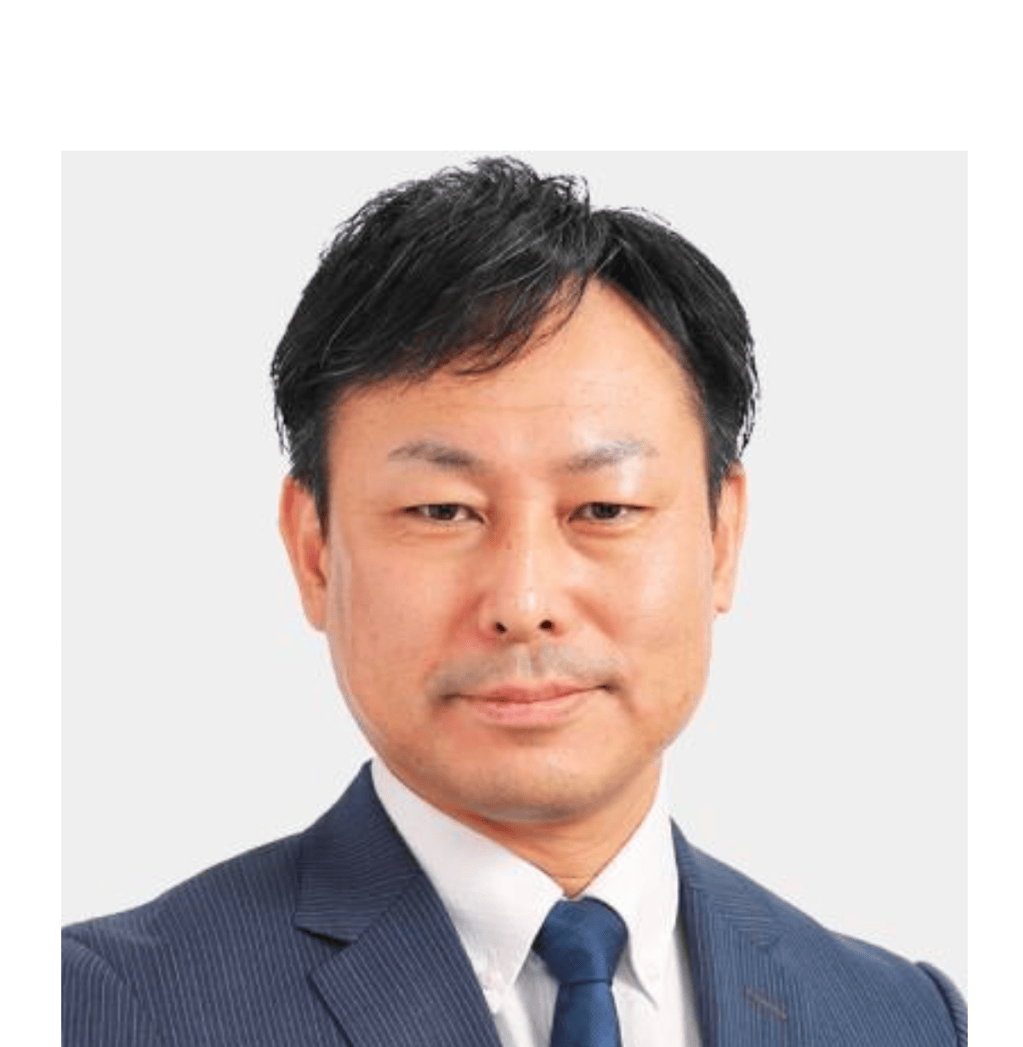
Photo 1: Profile photo of Mr. Sonoda.
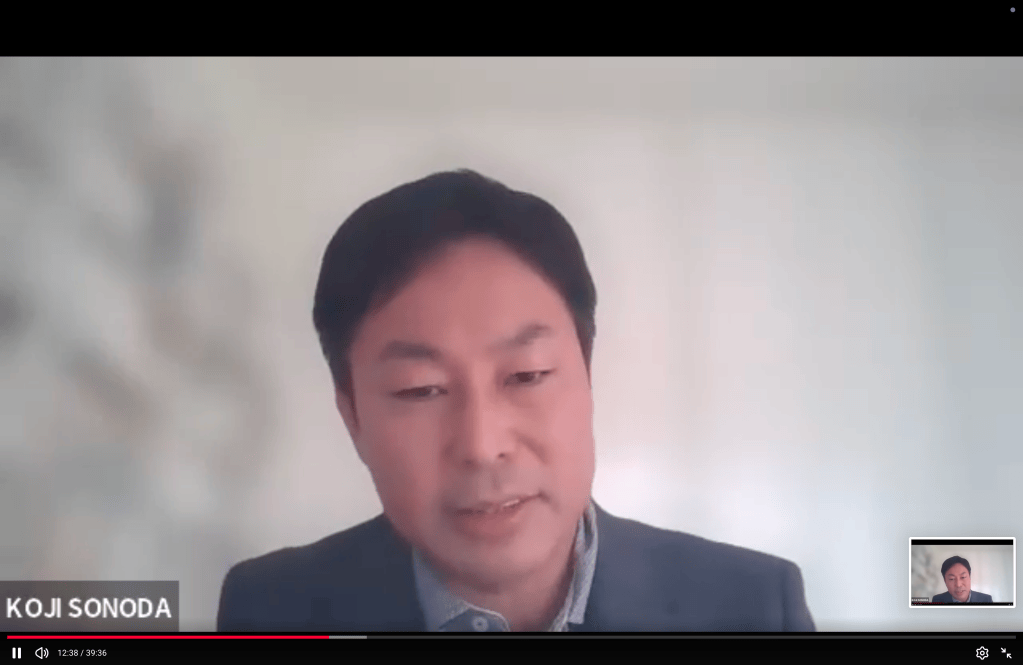
Photo 2: Mr. Sonoda during his interview with The Japan Lens on 5 Oct. 2026.
No artificial intelligence or machine translation programs were used in the creation of this post.