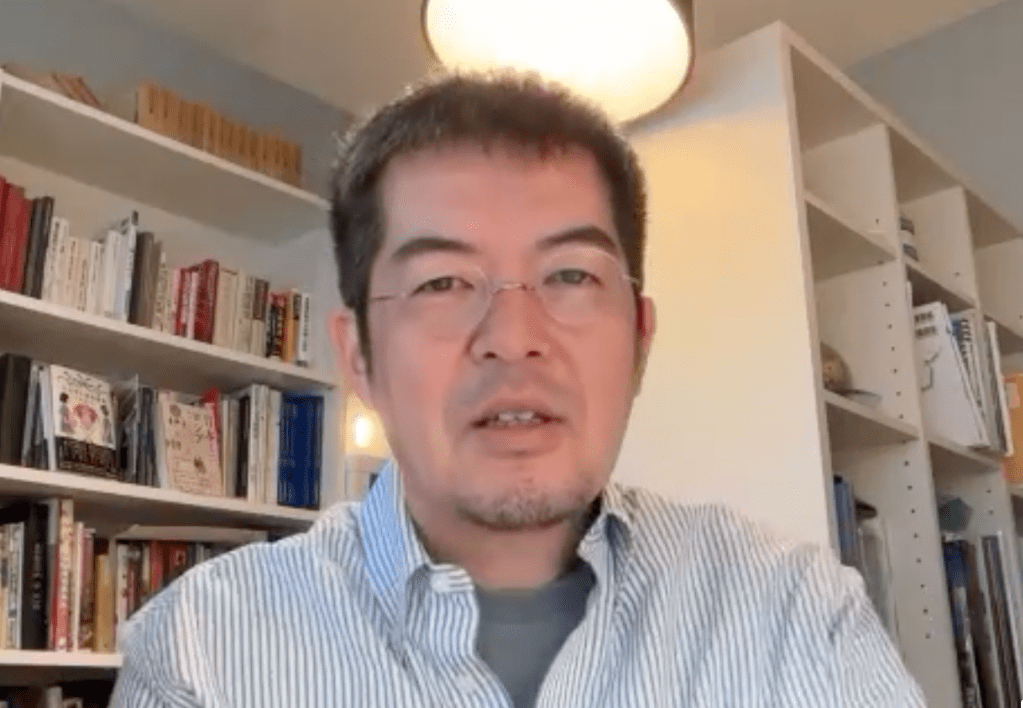
Interview with Russia expert Prof. Koizumi Yū. Some key takeaways from our discussion:
- The biggest crisis in the U.S.-Japan alliance is diminished American interest in Asia
- Key concerns on both sides are being ignored, so the Trump administration’s efforts to end the war in Ukraine are unlikely to work
- If a Taiwan contingency occurs in the late 2020s, Russia would likely help China without committing troops directly
- Strong military might alone is insufficient in deterring conflict
- Extreme divisions between the left and right are a threat to national security
(Click here for a Japanese version of the transcript.)
Koizumi Yū Bio
Prof. Koizumi has held numerous positions including: assistant analyst at the Ministry of Foreign Affairs of Japan; research fellow at the Institute for Future Engineering (IFENG); research fellow at the National Diet Library; and visiting researcher at the Institute of World Economy and International Relations at the Russian Academy of Sciences (IMEMO RAN).
His publications in Japanese include: Russian Military Strategy Today (2021); The War in Ukraine (2022); and Okhotsk Nuclear Bastion (2024). His book The Geopolitics of Imperial Russia (2019) was awarded the Suntory Prize for Social Sciences and Humanities. His most recent book, Koizumi Yū Discusses Security with Defenders of the Constitution, was reviewed here recently.
Prof. Koizumi holds a BA in Social Sciences and an MA in Political Science from Waseda University. He is an associate professor at Tokyo University specializing in security studies, Russian military thought and security policy, and international relations of the former Soviet republics. He is also a senior fellow at the Sasakawa Peace Foundation.
See below for an English transcript of the Japanese video, which has been edited for flow and clarity.
– – –
(Kafatos): What got you started researching Russia, and what are some recent topics of your research?
(Koizumi): I have a lot of trouble answering when people ask me, “Why did you become a Russia expert?” Unlike your usual Russia experts, it’s not like I started with an interest in Russia. In my case, I was something of a military geek. As a kid I would make plastic models of warships, and I used almost all my allowance on that. Then one day I said to myself, “A lot of the weapons made by Russians are kind of strange. Their ships and planes are like no others.” And it made me wonder about Russians, about the people who build such things. I started having an interest in them.
But to read their documents I had to study Russian. I also realized I had to know something about Russian history. And, in the course of learning those things, researching the Russian military became my line of work. In that sense, you could say I had a very unserious introduction to all things Russian. Then I got into the habit of reading Red Star, which is a Russian military newspaper. I got into the habit of looking at the Russian defense ministry’s website every day to see what information they were releasing. And, of course, I kept up with stories in the Russian media, I read about new laws involving military matters, and analyzed open source intelligence, or OSINT.
About seven or eight years ago I started using satellite imagery. I have especially been looking at the Russian Far East, an area analysts in the West don’t pay much attention to. I have been using satellite imagery to analyze Russian military trends in and around the region of Japan. Then the focus of all my research and analysis started a big war, so I have been closely following that. I imagine this is how a virologist feels when they suddenly encounter a pandemic. Watching the day-to-day developments took all my focus so I had to shelve some of my research.
But if all you do is focus on developments then you can lose yourself, so recently I’ve been making a point of occasionally studying history. For example, I am doing a bit of research on the history of Russian military doctrine as it concerns air power. I have been writing about that for the Air Self-Defense Force magazine. There’s also a periodical on maps called Map Journal for cartographers. They asked me to write about maps and the military, so I’ve done some research on military mapmaking in Russia. These have been some of my recent projects.
(Kafatos): It seems the U.S.-Japan relationship is becoming more complicated. The Trump tariffs have dealt an especially hard blow to the Japanese economy. U.S. President Donald Trump visited Japan in October but Prime Minister Takaichi Sanae avoided talking about sensitive matters, choosing instead to focus on solidarity. Do you think the U.S.-Japan relationship is healthy?
(Koizumi): It goes without saying there have always been ebbs and flows in the relationship. 80 years ago the two countries were at war; after that the U.S. occupied Japan, the security treaty was signed, and the two countries became allies. Now there are efforts to put this alliance on more equal footing. I would say there have been efforts to build a more equal Japan-U.S. partnership, especially the last 30 years. I think that has been the sense among the Japanese people. In fact, during the Cold War people in Japan didn’t use the term “Japan-U.S. alliance.” They simply used the term “Japan-U.S. security arrangement.” I think this was imbued with the sense that Japan was being occupied by America.
Eventually the American presence was no longer viewed as an occupation. As we started moving toward a more equal relationship people started using the term “Japan-U.S. alliance.”
I think the biggest crisis the Japan-U.S. relationship faces today is this: America is losing interest in Asia.
–Koizumi Yū
Conventionally, one perception held by Japanese nationalists has been that Japan is being occupied by America, and that our freedoms are being restricted. For their part, left-wingers in Japan have said America wants to start wars, and that if America wasn’t around then the Korean Peninsula and the Taiwan Strait and Indochina would be peaceful places. Either way, these perceptions were predicated on the assumption that America wanted to be in Asia.
But now we have a situation where America is saying, “Well, if you hate us so much then we’re going home.” That has made us panic a bit. At the end of the day, Japan’s security and diplomacy strategy have been built on the assumption that America would remain Japan’s ally. This notion did not falter at all during the Cold War. Various storms arose between Japan and the U.S., such as trade friction and America’s sudden recognition of the People’s Republic of China. But through all that, the idea that America would always be in Asia – and we would always be allies – never changed.
Now, there is the real possibility that this assumption could change for the first time in our 80-year history. I think it is at least clear that the Japan-U.S. relationship we have come to know over the years is now changing. In that sense, my opinion is we are in a real crisis.
Put another way, the Trump administration‘s tariffs and issues like that are things we have encountered and overcome before. They can be solved through technical negotiations; Japan’s public servants and politicians have experience dealing with such issues. But what’s different now is that for the first time ever we may be witnessing a wavering in the Japan-U.S. security arrangement. I think right now this is the biggest source of uncertainty and confusion.
(Kafatos): The outcome of the war in Ukraine is also a big concern. Can you tell us what is the current situation with the war? Also, even if European nations get serious about their support, can Ukraine really win? What do you think is the most realistic outcome?
(Koizumi): First, when thinking about winning the war in Ukraine, it’s important to consider what the conditions for victory are. From a moral standpoint it would be preferable for Ukraine to push Russian forces out of its territory, as quickly as possible and with as few casualties as possible. In my opinion, it would be ideal for that to be achieved with as few Ukrainians and Russians dying as possible.
However, it’s clear that is not happening. The war has now dragged on for three years and 10 months. That’s actually almost the same length as World War I, and it’s longer than the Pacific War, which was fought between Japan and America in World War II. This war has already become a huge, protracted war in which people are losing their lives.
If the Ukrainians are able to deny Russia’s strategic demands then that would, in a way, be a victory for them.
–Koizumi Yū
Another important point here is that the Ukrainian military launched a counterattack in 2023 that failed, so pushing Russian forces out is unlikely to occur in the foreseeable future. And from 2024 onward Russian forces have continued to press the Ukrainians in the eastern Donbas region. Russian forces continue to this day to slowly creep forward. So what will happen going forward? One thing I think we can say is the reality of Russia’s superior position in the conflict is unlikely to change. Ukraine will continue to be pressed by Russian forces.
But another important question is this: “Can Russia as a whole nation achieve victory against Ukraine?” I think that will be difficult for Russia to achieve. For example, can Russian forces occupy Kiev? And on top of that, for the goals Russia has continuously stated – objectives such as the large-scale reduction of Ukrainian military power or regime change – will they be able to force Ukraine to do these things? Because that is what would constitute victory for Russia. In that sense, I think victory for the Russians will also be difficult to achieve. Taken from another angle, I think you could say if the Ukrainians are able to deny Russia’s strategic demands then that would, in a way, be a victory for them.
What are those demands? This war started on February 24, 2022. Putin issued a video message that day to the citizens of Russia explaining the three objectives of the war: denazification, demilitarization, and establishment of Ukraine’s neutrality.
The “denazification” piece is predicated on the assumption that Ukraine is run by Nazis and, of course, that is not the case. But the Russian government has been saying all along that the political upheaval of 2014 was a Nazi coup d’état supported by America. That’s why Putin never actually uses the word “government” when talking about the governing state in Ukraine. You won’t hear him saying gosudarstvo (Государство) or vlast (власть) when talking about the Ukrainian government; he only refers to it as a regime.
Putin’s view is that an illegal cabal has taken root in the Ukrainian capital, so when he uses terms like “denazification” that means, first and foremost, getting rid of this cabal. In his mind that probably means getting rid of Zelensky, i.e., arresting or killing him, and then greatly reducing Ukraine’s military.
Then there is reference to establishing Ukraine’s “neutrality.” This term includes the meaning of not allowing Ukraine to join NATO, but it has other meanings as well. If you look at Russia’s conditions for stopping hostilities issued when the war first started, they include withdrawal of all international legal actions against Russia. They also wrote all sanctions must be removed. The term “neutrality” here doesn’t just mean making Ukraine neutral; it also means ensuring Ukraine does not defy or go against Russia.
Denazification, demilitarization, and the establishment of Ukraine’s neutrality…
Russia’s ability or inability to achieve these goals is what will determine victory or defeat.
–Koizumi Yū
In sum, I think the Russian side’s objective in this war is to turn Ukraine into a protectorate, meaning, they want to place the country under Russian control. That is their goal. Put differently, they seek to greatly limit Ukraine’s sovereignty. The Putin administration has been expressing dissatisfaction with all these issues using the term “fundamental causes,” which in Russian is pervoprichina (Первопричина). And how to address these fundamental causes? What we just discussed: denazification, demilitarization, and establishment of Ukraine’s neutrality. Russia is waging this war in order to achieve these goals, period. It’s not about making some territorial gains on the front lines. Russia’s ability or inability to achieve these goals is what will determine victory or defeat.
Another important element here is the Trump administration’s policies for mediating the war in Ukraine – this is not going very well. I think that’s because they are ignoring Putin’s war objectives. That’s not to say they don’t understand; I think Trump and his advisors do understand that Putin seeks to control and dominate Ukraine. But what we keep hearing out of the Trump administration is, “Where are we going to draw the line?” Neither Putin nor the Ukrainians are likely to show interest in that. From Ukraine’s perspective they are wondering, “What will happen to our security after said line is drawn?” Their fundamental security concerns will remain.
I don’t think Trump is likely to achieve any meaningful results.
–Koizumi Yū, on the U.S. President’s efforts to end the war in Ukraine
(Kafatos): Chinese movements also cannot be ignored. There are predictions saying Xi Jinping will invade Taiwan sometime in his fourth term. Even if that happens some think Russia will not get directly involved in the conflict. Nevertheless, Russia may try to use this opportunity to do something against Japan or the U.S. What do you think Russia’s role might be if China does invade Taiwan?
(Koizumi): I think Russia’s role in a Taiwan contingency would be incredibly limited. First, I think we should look at whether the assumption that a contingency will occur in 2027 is correct or not. Whenever I hear this prediction it makes me feel like we’re supposed to prepare for some big competition like the Olympics. It’s like, “OK everyone, listen up! We have the 2027 Taiwan contingency/Olympics to prepare for so let’s be sure to practice hard for that!” That’s what it sounds like to me and I don’t think that’s right.
It goes without saying Xi Jinping has the option of declaring war, but he also has the option of not declaring war. And which option he chooses could change considerably depending on the circumstances, such as what Japan or the U.S. do. We don’t know what may or may not happen in 2027 or 2028 but, it’s true, war could break out. We have to ask ourselves: what are our strategic goals in order to push such a contingency back past 2027? Or, even better, to make sure 2027 never happens?
But let’s just say for the sake of argument that sometime in the late 2020s China decides to exercise a massive use of force against Taiwan. At that point, how much military power will Russia have in the Far East? We’re talking about late 2020s here, especially around 2027. Is the war in Ukraine over? I think that is highly doubtful. If that’s the case, the majority of Russia’s military power will be focused in the west. Even back when the war in Ukraine first started, the amount of Russian military power in the eastern military district was only around 80,000 troops, according to estimates by the Japanese Ministry of Defense. That is very small.
Even Japan’s Ground Self-Defense Force (GSDF) currently numbers around 149,000. The Chinese People’s Liberation Army (PLA) has over 1 million troops. So in comparison to those numbers, even prior to the war starting, Russia’s ground troop presence in the east was the smallest in Asia. And those numbers have decreased even further due to the war. Unless that situation changes, Russia’s ability to commit to ground actions in the east – assuming they would even want to – are incredibly limited.
On the other hand, even after the war in Ukraine started, Russia did not decrease its naval and air forces to the east significantly. Some of these forces have even been modernized slightly, particularly Russia’s maritime forces with the deployment of new warships.
That means if Russia wants to get involved in a Taiwan contingency it will have to be either in a maritime or aerial capacity. I think that is all we can reasonably expect from them.
Now, is it realistic to imagine the Russian air force would, for example, come all the way down to the Taiwan Strait and run bombing sorties alongside Chinese forces? I think not. After all, China isn’t doing that for Russia in its war. We have to consider what China is doing for Russia because Russia is likely to reciprocate in kind. If that’s true, and we look at what Russia can do militarily in a Taiwan contingency, perhaps they will do something to the north of Japan to force Japanese or American forces to move northward. That kind of support for China is a possibility. Or the Russian military might execute some kind of large-scale exercises in the Sea of Okhotsk, or take suspicious actions in the Sea of Japan.
They might also deploy nuclear submarines for undersea operations around the Kamchatka Peninsula. Russia’s northern fleet has nuclear subs for such underwater operations. They probably have one particular sub that can launch mini subs from its belly. These mini subs have robot arms – crab-like pinchers – and they can do things like set sensors on the seafloor, search for American sensors, or retrieve wreckage from missile tests. These are the types of missions this naval unit is responsible for. Word has it they can attach listening devices to undersea cables, and even cut them.
Probably the biggest contribution Russia could make to a Chinese war effort is the continuous supply of energy.
–Koizumi Yū, on how Russia might help China in a Taiwan contingency
Conventional wisdom stated Russia only had these types of submarine units on the Atlantic side, but now it’s believed the Pacific fleet does as well. If they do, and a contingency does occurs in the Taiwan Strait in the late 2020s, we could reasonably expect Russia to use these submarines to cut important undersea cables between the U.S. and Japan, or even all cables running to Taiwan to isolate it completely.
But probably the biggest contribution Russia could make to a Chinese war effort is the continuous supply of energy. In other words, continuing to supply a stable flow of energy from land that does not depend on sea lanes that could be compromised. I think China would be most grateful for that. And it would be a good opportunity for Russia as well. After all, it’s becoming increasingly difficult for Russia to sell energy throughout the world. Europe used to be their biggest customer, but now they are getting further and further away from buying Russian energy.
This was especially evident when the war started. The EU drafted a plan called “Repower EU,” whose strategic objective was to free Europe of dependence on Russian oil. At first I didn’t think they would be able to do it, but they have really stopped importing Russian oil and coal, and they are gradually decreasing their use of natural gas, too. They have even said in this latest package of sanctions that they intend to stop all use of Russian natural gas either next year or the year after. So the EU is serious about it.
That means Russia is relying on India and China to buy more energy. But India, fearing American sanctions, has reduced its purchases of energy from Russia considerably. That makes China Russia’s last big customer. But, of course, China isn’t buying Russian natural gas out of the goodness of its heart; it demands things in return. What they are especially putting hopes in is the new Power of Siberia 2 pipeline. The two sides have been talking about it for over 20 years, but they can’t seem to get it together. One issue is they can’t agree on the price per cubic meter for the natural gas.
China is also demanding Russia bear the construction costs for laying the pipeline. Russia doesn’t want to do that because it will eat into their profits. So, if I was someone in the Kremlin or an executive at Gazprom, I might say to myself, “China has invaded Taiwan and is shunned by the world? Now is our chance to sell them gas at rates favorable to Russia.” In light of that, Russia is probably very interested in watching what kind of position China takes towards Taiwan.
(Kafatos): I understand you were recently targeted by Russian sanctions. Can you tell us what happened?
(Koizumi): In recent years the Russian government has issued five bans prohibiting certain Japanese nationals from entering the country. There is a total of 499 Japanese nationals prohibited indefinitely by the Russian government from entering the country. The first sanctions package was issued in 2022 when the war started. Most of those affected were Japanese legislators along with some academics and media personalities.
In 2022 I was not targeted. I had been criticizing Russia’s invasion on TV and in newspaper interviews quite often, so I thought I would probably be targeted but I wasn’t. Oddly, other university academics who hadn’t made much reference to Russia were targeted by those sanctions. I wondered about that, until I realized they were all professors. You see, they were only targeting academics who were full-fledged professors. Back then my job title was only “special assistant professor” or “instructor.” I guess I wasn’t prestigious enough so the Russian government didn’t bother sanctioning me. I was too small fry for them to care about.
As a citizen of Japan I am very proud … the Japanese government hasn’t removed its sanctions on Russia.
–Koizumi Yū
In subsequent sanctions Japanese academics weren’t targeted, not for a while. It was mostly politicians and big industry leaders like the head of Toyota. The message was like, “If you guys are going to join the U.S. and EU and continue targeting us with economic sanctions, then Japan can’t do business in Russia.” Then Spokeswoman (Maria) Zakharova of the Russian foreign ministry sent a message that blatantly targeted Japan with threats of economic sanctions. She said something like, “Toyota won’t be allowed to sell cars in Russia anymore.”
As a citizen of Japan I am very proud that, despite being threatened in this way, the Japanese government hasn’t removed its sanctions on Russia for its aggression against Ukraine. In fact, those sanctions are becoming stricter. If we take an extremely short-term view of Japan’s national security then, sure, it might seem like the right choice to overlook Russian aggression so Toyota can sell cars in Russia or so we can buy cheap gas.
But could Japan really safely do business in that kind of world? I think that’s highly doubtful. What if Japan one day finds itself in a position like Ukraine? Maybe no one would come to help us if we only sought short-term benefits for ourselves. So while some might think it’s better to buy cars from China or sell energy to China, that’s not the kind of world we want to live in. Even if Japan has to suffer some economic losses in the short term, we have sent the message to aggressing nations that Japan can’t do business with them. Looking back at all of postwar Japan’s foreign policies, I think this is a really good one, one we can all be proud of. The Russian government’s threats against Japan haven’t really worked, so I imagine they are at a loss.
As for this latest round of sanctions from Russia, these were issued when the Takaichi administration was formed, so Moscow is starting to rethink their messaging. They are aware the Takaichi administration is a successor to (former prime minister) Abe Shinzō. Takaichi had very close ties with Abe, and I think Russia has been hoping they will be able to get along well with her. They hope they will be able to talk about economic collaboration, like they did many times over in summit meetings with Abe.
That said, the Takaichi administration is also hawkish on security. The Russians are worried if things go in the wrong direction then the Japanese government might take a hard line against Russia, as was the case with the Kishida administration.
So I think this latest round of sanctions from Russia, where 30 Japanese nationals are now prohibited entry, was something of a light punch. It’s natural that someone like me, who has been extremely critical of Russia, be prohibited entry. If I can’t travel to Russia there’s no particular downside, for Japan or for Russia. But it’s worth noting no industry or economy-related personalities were targeted this time. It’s almost all researchers and media personalities.
I am deeply honored to have been the target of Russia’s warning shot.
-Koizumi Yū, on being sanctioned by the Russian government
So, again, I think this is just a message to Japan, a sort of warning shot across the bow. It’s like they’re warning the Takaichi administration, “Take a hard line against us and unpleasant things will happen.”
(Kafatos): Japan has taken on more of a leadership role in maintaining the international order after America has withdrawn. Maybe it’s natural for Japan, now a strong representative of the international order, to be the target of such a warning shot.
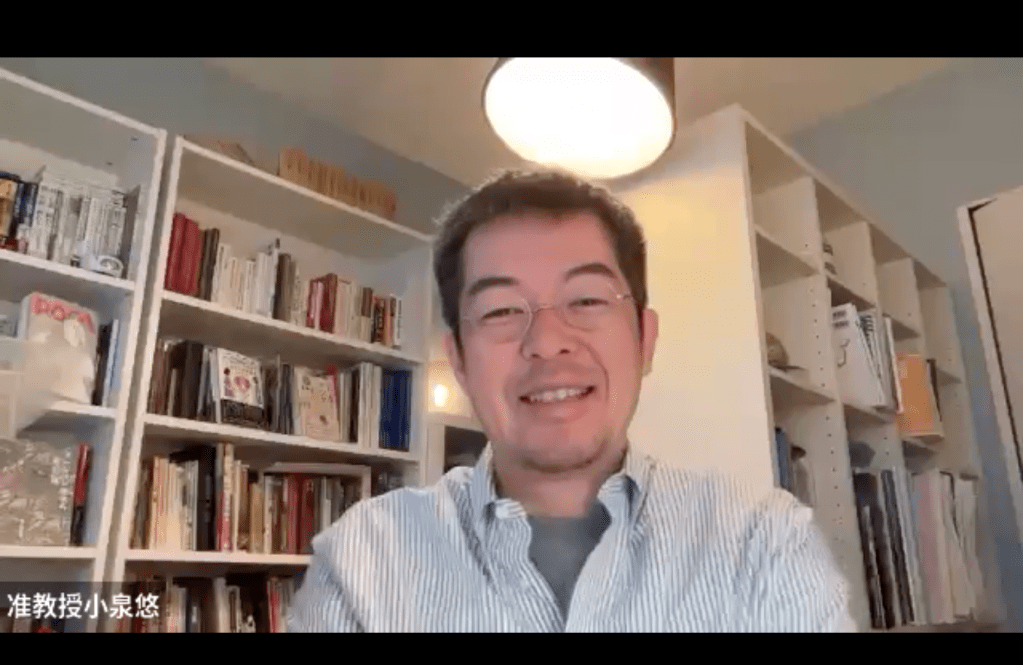
(Koizumi): I am deeply honored to have been the target of Russia’s warning shot. I probably have a big hole in my chest right now (laughs).
(Kafatos): There is a lot of tension in East Asia now. What should be done to prevent conflict in the region? What do you think is the most effective deterrent in today’s world? And, as a related question, do you think the foreign policies of the Trump administration are contributing to deterring conflict?
(Koizumi): I think deterring war is an extremely complicated task. Frankly, there are a lot of unknown variables: what kind of deterrence should be used, and to deter what kind of war? Fundamentally speaking, of course, the balance of military power between nations comes into play, as well as the capabilities of weapons and the degree of training. Some think as long as these are properly maintained between potential combatants then war will not occur, but that is simply not the case. The Japanese people proved that 85 years ago. There was no way Japan was going to win a war against America. But, for some reason, Japan attacked Pearl Harbor anyway. They knew it was suicidal but they did it anyway.
I think that’s a good example. It proves that keeping up certain measurable indices in military power isn’t enough to maintain deterrence. For true deterrence, in addition to maintaining military power, there’s something of a more ambiguous missing link. If that isn’t found then I don’t think deterrence can function.
In particle physics there’s the concept of “strong force” and “weak force,” and each has a role to play. I think that also applies to the tools available to a nation. Military power, of all the forces available to a country’s government, is probably the strongest. But I think just possessing strong military force doesn’t cut it. Overly focusing on that means we don’t look for more fine-tuned methods, for developing our so-called “weak forces.” Finding and augmenting those is really important.
For example, weak force might include economic interdependence or diplomatic channels, or things that are hard to measure like ties between individuals. In my opinion, Japan’s first order of business is to skillfully integrate all these different types of forces. In the past Japan didn’t have to think overly about this sort of thing because the “strong force” portion was almost entirely entrusted to America. The thinking went that the U.S. will leverage its strong force for us. If Japan is attacked then our military just has to hold out for a month, then America will take care of the rest. As for Japan’s part, our economy was to be used to forge ties throughout Asia, and these would function as some of Japan’s diplomatic tools. That’s how the thinking went.
I think the so-called weak force of mutual economic exchange acts as a check on our strong forces, and on war.
-Koizumi Yū, on why military might alone is insufficient in deterring conflict
But I think going forward what is called for in Asia is how can Japan rebuild its strong force? How can we develop our concept of military power? China is building its strong force capabilities at an incredible pace, but at the expense of their weak force. Put simply, criticism of China in Asia has become much more pronounced.
In this latest fracas China moved quickly to cancel many direct flights to Japan. Now we don’t see many Chinese tourists visiting Japan. Until recently, when walking around certain parts of Tokyo, you often felt like there were more Chinese around than Japanese. Now you don’t see hardly any Chinese anymore. I think that’s sad. For my part, I would like them to come around again. I think the so-called “weak force” of mutual economic exchange acts as a check on our strong forces, and on war. I think that’s what called for now for all sides: to tamp down on our strong forces and strengthen our weak forces.
Take America for example. From our perspective as Japanese, we’ve always thought of the U.S. as the one to exercise strong force. We believed that, when it comes down to brass tacks, America will stand and deliver. America doesn’t hesitate to exercise military might in a crisis. In a way, America’s strong force acted as an underwriter for our deterrent strategy. It’s hard to quantify but I do believe we had a sense of trust or faith in that.
He thinks of it as a tool with which to threaten others.
-Koizumi Yū, on how Trump views military might
But now I must say that sense of trust has dropped considerably. When I listen to Trump talk, I often get the impression he doesn’t think of military might as a tool for waging war. He thinks of it as a tool with which to threaten others.
Military power can fundamentally be effective for both: for fighting and for threatening. America’s strong capability to fight meant there was a strong threatening effect as well. But when Trump was inaugurated he expressed the view that if you have a strong military then you don’t need to fight. In July of 2025 he said to Zelensky something like, “You should fire a bunch of missiles into Moscow or St. Petersburg.” To the effect of, that would shock Putin and make him stop the war. I think that shows that, for Trump, missiles and cannons aren’t for fighting; they are tools to use in a negotiation.
Of course military might is important, but you have to use it skillfully. If you don’t, they’ll see right through you. If people think Trump doesn’t want to commit to a fight or that he’s afraid of many people dying or of suffering economic losses, then the strong force of America’s painstakingly built military might lose its efficacy. People tend to think of Trump as a gruff or violent person, but not me. I get the sense he’s very sensitive. In a way I think this sensitivity is a weakness. And, from Japan’s standpoint, that is very unsettling.
Now it feels like the strong force piece of Japan’s diplomatic and security policy has sort of popped out and fallen. Here at Tokyo University we conduct polls on Japanese respondents regarding diplomacy and security. 2024 was the first year we started doing the survey twice a year. We ask respondents questions like whether they think America is useful to Japan’s security, and whether they think America will come to the rescue if Japan is in danger. The sense of trust in America, as one might expect, is quickly dropping.
Respondents also show increased awareness of the threat coming from China and Russia. They think China and Russia are dangerous. They also think America might not come to help if something goes down. Given that, you might think Japanese would conclude we have to increase our own defense capabilities. After all, that’s what’s happening in Europe. They’re increasing defense spending and their nuclear arsenals. But Japanese respondents don’t want to do such things. They’re afraid of China, afraid of Russia, increasingly convinced America won’t come to help, but they don’t want to increase defense spending. Or, if something happens in Taiwan or on the Korean Peninsula, many are against us getting involved militarily.
So I think the people of Japan are still confused or unsure in this area. Perhaps they think if America goes away then we will be able to rely on someone else. But there is no one else. We are being forced to see just how much we have actually depended on America, to see how irreplaceable of a presence America has been for us. But I get the sense people still haven’t really digested this new reality.
(Kafatos): Recently you published a book titled Koizumi Yū Discusses Security with Defenders of the Constitution. It seems there are divisions occurring between those who would protect Japan’s pacifist Constitution and those on the right. And in the U.S., while it differs from the Japanese situation, a similar split has occurred between Democrats and Republicans. What kind of division is occurring inside Japan? And why did you write this book?
(Koizumi): The way I see it, the domestic division in Japan has always been there. Basically, the starting point of the split has been how Japanese people view the Empire of Japan, or the war conducted by the Empire of Japan. But the more direct topic at hand has been the issue of Article 9 of the Constitution. In Section 2 of Article 9 it states very clearly that Japan will not possess military power for ground, sea, and air forces. I am a native speaker of Japanese and it is clear to me when I read the Constitution: we are not allowed to have any military forces, including the Self-Defense Forces (SDF).
Not only that, this Constitution was drafted under strong American influence. That’s why Japanese nationalists think the disarming of our people was forced upon us by America. On the other hand, Japanese liberals think it’s a wonderful document, that it’s an important safety device for ensuring Japan never again starts a war of aggression. They think the pacifist Constitution is itself the very essence of security. These fundamentally different views of Article 9 exist in Japanese society.
That’s why when we imagine debates on security policy, other countries might discuss, “Should we increase or decrease defense spending?” or “Should we do away with the system of the draft?” or “Should we allow America to store nuclear weapons in our territory?” Things like that.
But in the case of Japan, the starting point of the discussion is, “Is Japan allowed to defend itself? Is it OK to have the Self-Defense Forces or not?” That’s where the discussions on security start, so it is a very different situation when compared to other countries. It has been an environment of discourse where gaps between the two sides have remained in perpetuity.
The reason I published this book is because I had a desire to act as a bridge between the two sides. Partly that’s because the pacifists and the nationalists think of each other as terrible people. You often hear hawks say, for example, pacifists must be spying for Russia or China. And pacifists say those who want to revise the Constitution are warmongers, or they have some desire to invade parts of Asia, or they’re trying to help defense companies profit greatly.
They argue against each other and think the other is utterly terrible. Me, I don’t think either side is evil. My parents are traditional Japanese liberals, people who have held the strong belief that Article 9 of the Constitution must never be changed. As their son, I happen to disagree. But I also don’t think they’re Russian or Chinese agents, or evil people.
I do think securing our nation with the current Article 9 is not realistically possible. I want to see the Constitution changed, but my thinking is we should have the SDF as a military that protects democracy. I don’t think I’m wrong about that. And it’s not like I’m getting money from the defense companies to say that. If I were, I would have paid off my mortgage a long time ago (laughs).
Again, neither side is a bunch of spies or people with evil intentions. I believe both sides want to attain the same goal: a peaceful Japan. So my starting point with this book was almost this primitive, emotional place of just wanting us to talk to each other. At the end of the day, we’re all Japanese and we should be able to discuss these things, so that’s why I wrote this book. It’s a record of a lecture I gave with a Q&A session when I was invited to Kobe to speak to this pacifist assembly. Of course I knew we wouldn’t see eye to eye on everything, but I just wanted to have a conversation.
Each thinks the other is terrible and out of their minds. In my view, that’s a threat to our national security.
-Koizumi Yū, on divisions between the left and right
If you go out for a drink with someone from the other side I think you’ll discover they’re not evil people with bad intentions. You’ll see that it’s just that you have different opinions. That’s all I really wanted to emphasize, but – to a surprising degree – that doesn’t appear to be obvious to these opposing factions. Each thinks the other is terrible and out of their minds. In my view, that’s a threat to our national security.
The divisions in Japan, traditionally from the Cold War period, have generally been a standoff between the right and the left. But it seems to me recently there’s sort of this “slanted right” and “slanted left.” I say slanted because these people have some kind of eccentric element to them, something that’s not quite right. For one, these advocates seem to espouse conspiracy theories. They say things like, “That thing that’s happening is a plot from another country,” or “Whoever states an opinion like that has been bought off by foreign agents.” You’ll also see people saying things with no scientific basis, bringing up spiritual talks and the like. The voices from these types of people have been amplified more and more.
Those more traditional left and traditional right parties are not in the foreground anymore. Honestly, they are unremarkable; both traditional advocates tend to be serious, and the things they say are not particularly interesting. But now you have these people using strong language to talk about conspiracy theories. They post sensationalist messages on YouTube and TikTok, they grab the spotlight and people’s attention.
So I think the traditional political axis has become somewhat twisted. And, in my opinion, these twisted or slanted views are particularly worrisome. Those traditional pacifists and hawks are, at the root, serious people. I believe if they could reengage in discussion then we could come to some kind of agreement. As we see public discourse go in this more twisted and slanted direction, those serious-minded people on the left and the right need to set aside their differences. Now more than ever, they need to talk to each other.
(Kafatos): Many Americans, unfortunately, do not have a grasp of what is going on in Japan or overseas. Is there something that you want to tell Americans about Russia or Japan or Japan-U.S. relations, something you really want them to know? Especially something you want to say to U.S. diplomatic policymakers?
The world doesn’t just revolve around superpowers.
-Koizumi Yū
(Koizumi): First, to everyday Americans, I would definitely say this: I think it’s a good idea to study foreign languages. I studied English and Russian and found that language is, in a way, a sort of algorithm for how we think about things. To learn another language is to learn another way of thinking. In my case, I really feel that helped me broaden the scope of my vision. So that is one thing I would say.
To American foreign policy makers, I would say, “The world doesn’t just revolve around superpowers.” Breaking this world into superpower nation segments and just thinking from that standpoint makes things very simple and easy to understand. And the realism school of thought starts with the premise that we need to make superpowers don’t go to war with each other. When that’s the lens through which you view the world, non-superpower countries tend to get treated like pawns on a chessboard.
I don’t think Japan is a superpower, not in the military sense at least, and I know there is a tendency to treat Japan like a pawn. Does that mean we are just going to move the way America or Russia or China want us to? No, it doesn’t. We’re a pretty willful or selfish sort of pawn, and I really hope American policymakers will contemplate this truth. Because, if you don’t, you might find the pawn not listening to what you say, or the chess game might just fail utterly.
Great superpower nations have a lot of strength. So, if you like, you could say superpowers are the players. And for superpowers playing the game, I am sure it can be a pain in the neck to have to listen to the opinions of all the little pawns while you’re busy trying to move all the chess pieces along.
If you want to call the pieces that aren’t major players “pawns” then by all means do so. But my hope is America will foster a way of listening to us non-superpower countries. It seems to me Russia isn’t very good at listening to us. I thought for a while China might be good at it, but recently it’s clear they are not. At least in that regard I think America is a truly more clever and skillful nation that can do that for non-superpower countries like us. And it’s in that American skillfulness that I continue to have hope.
(Kafatos): So hope hasn’t died yet, that’s a heartening comment. Thank you very much, and thank you for being here.
(Koizumi): Thank you for having me.
– – –
Those interested in learning more about Prof. Koizumi’s research can access his Deep Dive blog here (in Japanese). The Japan Lens wholeheartedly thanks Prof. Koizumi for his valuable time and insights.
Photo 1: Prof. Koizumi during his interview with The Japan Lens (Dec. 2025).
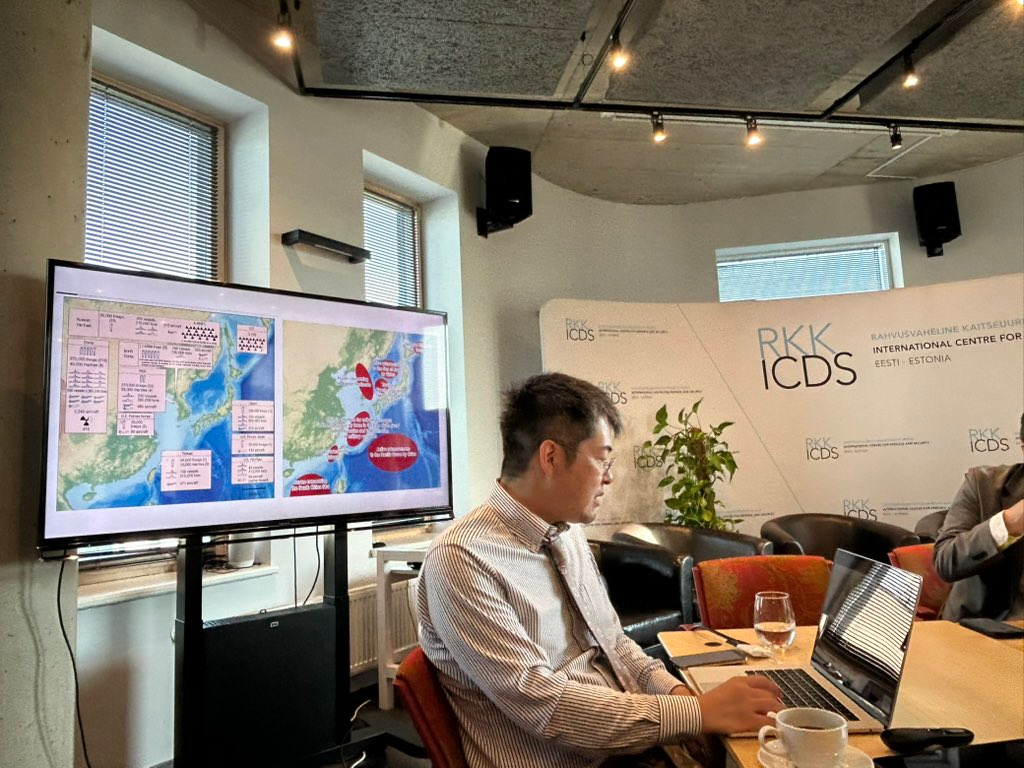
Photo 2: Prof. Koizumi giving a lecture in Estonia (Sept. 2025).
No artificial intelligence or machine translation programs were used in the creation of this post.

 The Japan Lens
One response to “Interview with Koizumi Yū: “America should listen to us non-superpower countries too””
[…] (インタビューの英訳はこちらへ 。) […]
LikeLike