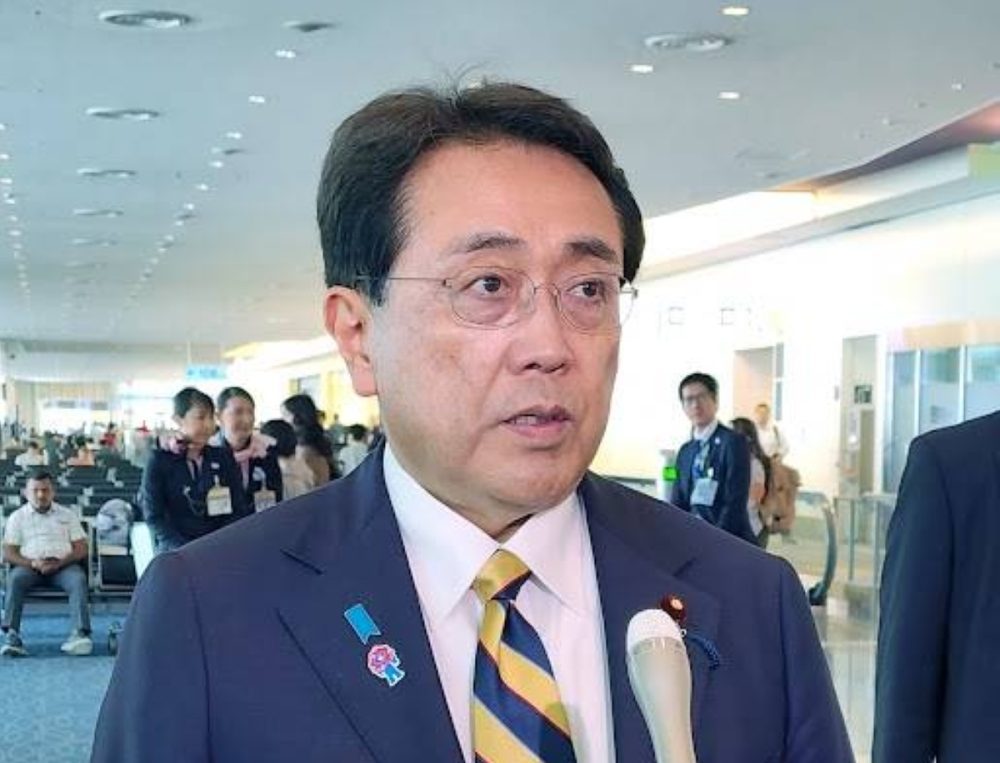
Akazawa Ryōsei, Japan’s minister of economic revitalization and chief tariff negotiator, is back in Washington. He is scheduled to meet with U.S. Trade Representative (USTR) Jamieson Greer for a third round of meetings. Like most of the world’s nations, Japan is facing huge tariffs from U.S. President Donald Trump come July – 25% on cars, auto parts, and steel/aluminum. Japan’s prime minister, Ishiba Shigeru, is hoping for a much-needed deal.
Given the underwhelming results of the first two rounds of talks, hopes in Japan are muted. But, according to a special feature in the Nikkei Shimbun, this time Akazawa plans to use a three-pronged approach.
What’s on offer
The first builds upon past efforts, where Japanese officials have taken great pains to drill this point home: “Japan is not China.” They have highlighted over and over how America’s trade deficits with Japan and China differ both in terms of quantity and quality. So far, this argument does not appear to have swayed the mercurial Trump. So, shifting tack a little, Akazawa and his team plan to appeal to a sense of solidarity against the Chinese threat. Call it the “economic security” approach – a catch-all term for protecting national interests in the economic realm.
Akazawa has specific proposals. He is expected to push for greater collaboration in areas both Japan and the U.S. care about, including the production of strategic ships, an area now dominated by China. He will also propose a joint U.S.-Japan fund to revitalize shipbuilding in both nations.
The Nikkei article describes how Akazawa will ask that both sides “consider ways of collaborating on (production of) icebreaking vessels crucial to navigating Arctic sea lanes,”1 another area the allies need to cooperate on. Under this plan, the Japanese government would also reopen dormant ports to help repair and refurbish ships, presumably to include American vessels. Other security-related proposals will include joint development of next-gen aircraft, collaboration on rare-earth elements, and strengthening semiconductor supply chains.
Akazawa’s second focus will be automobiles. He will propose the U.S. and Japan mutually recognize each other’s car safety regulations. Here, the Japanese are trying to address criticisms that predate the Trump administration. U.S. officials have long asserted Japanese regulations make it hard for American cars to take off in Japan. (In his memoir the late Abe Shinzō described heated arguments with then-President Obama about autos.) Trump has harped on the issue as well, so Akazawa hopes this will be seen as a considerable concession.
And third, cognizant of how Trump likes wiping away big trade deficits with big purchases, Akazawa is likely to propose just that: big buys in exchange for big relief. Specifically, he will probably offer to buy more American soyabeans and corn, as well as corn-based bioethanol fuels, all of which Japan could use more of.
The outlook
How do the odds look for Akazawa? A major hurdle to the first of the three prongs might be how the U.S. president views, or claims to view, Japan. Some say Trump’s views of Japan are stuck in the 1980s, when Japanese companies were making big trophy purchases like buying large swathes of downtown Manhattan. Trump has also asserted America’s friendship with Japan is not mutually beneficial. Even Abe struggled to change Trump’s views of Japan, with mixed results. Now, instead of trying to show who they are, perhaps Akazawa’s delegation plans to emphasize who they are not, namely, China. Given the hawkish anti-China mood in Washington, it seems a good idea and it might work. But he will have to ensure the magnitude of the win he is offering the U.S. president doesn’t get lost in wonkish details.
As for the Japanese auto proposal, this might be an easy concession for Tokyo to make. Some of the biggest hurdles to selling American cars in Japan are structural. Unlike Americans, Japanese drive on the left side of the road, and the driver’s seat is on the right. Japanese streets are also narrow and ill-suited for large American vehicles. Proposing to recognize America’s safety standards could give Trump a big win on paper that, ultimately, would have little effect on Japan’s domestic car market.
As for proposing to buy lots of corn and soyabeans, this idea epitomizes the “win-win” concept Japanese policymakers love emphasizing these days. For Trump the win would be giving him bragging rights to say, thanks to his negotiating acumen, Japan now buys much more U.S. ag than before.
(It is not lost on the Japanese that China’s retaliatory tariffs, meant to hurt Trump supporters, have targeted American corn and soyabean farmers.) And the win for Ishiba? Continued protection for Japan’s rice farmers, a vital issue for party constituents.
Clearly the heat is on in Tokyo, but insiders doubt the Japanese will be able persuade Trump officials to remove all the tariffs. David Boling, Japan Chair at Eurasia Group and a former U.S.-Japan trade official at USTR, thinks a reduction in Trump’s tariffs below 10% is unlikely. Other trade experts have also said a bilateral deal is unlikely to get Japan what it wants.
“If both sides aren’t satisfied, there won’t be an agreement.”
Akazawa Ryōsei, Japan’s tariff negotiator
Trump officials are also keen to make a deal, so they might put even more pressure on Japan to fold. But, as discussed by Daniel Desrochers and Phelim Kine in this Politico article, Ishiba is under pressure at home to “not look weak in talks with the U.S.,” especially given newly formed cracks in the alliance’s foundation. Tokyo might be steeling itself for a long, drawn-out slog. Just before flying to Washington, Akazawa told reporters, “If both sides aren’t satisfied, there won’t be an agreement.”2
Of course, the biggest wild card in all this remains the U.S. president himself. Japanese officials are wary of a sudden rapprochement between Trump and China’s Xi Jinping that leaves them in the lurch. And, since Trump has threatened the formerly unthinkable – the withdrawal of U.S. troops from East Asia – Tokyo’s calculus on how far to go for a deal might be changing. More will be revealed later this week.
– – –
1Nikkei Shimbun. 2025. “Playing the ‘Collaboration on Economic Security’ Card” (経済安保協力、カードに). Nikkei Online, 23 May 2025.「北極海航路に欠かせない砕氷船の協力も検討…」。
2Ibid. 「互いに納得できる内容でないと合意が成り立たない」。
Photo 1: The port of Los Angeles in Long Beach, the destination of many products from Asia (April 2025).
Photo 2: Akazawa Ryōsei talks to reporters before leaving for Washington (The Japan Times).
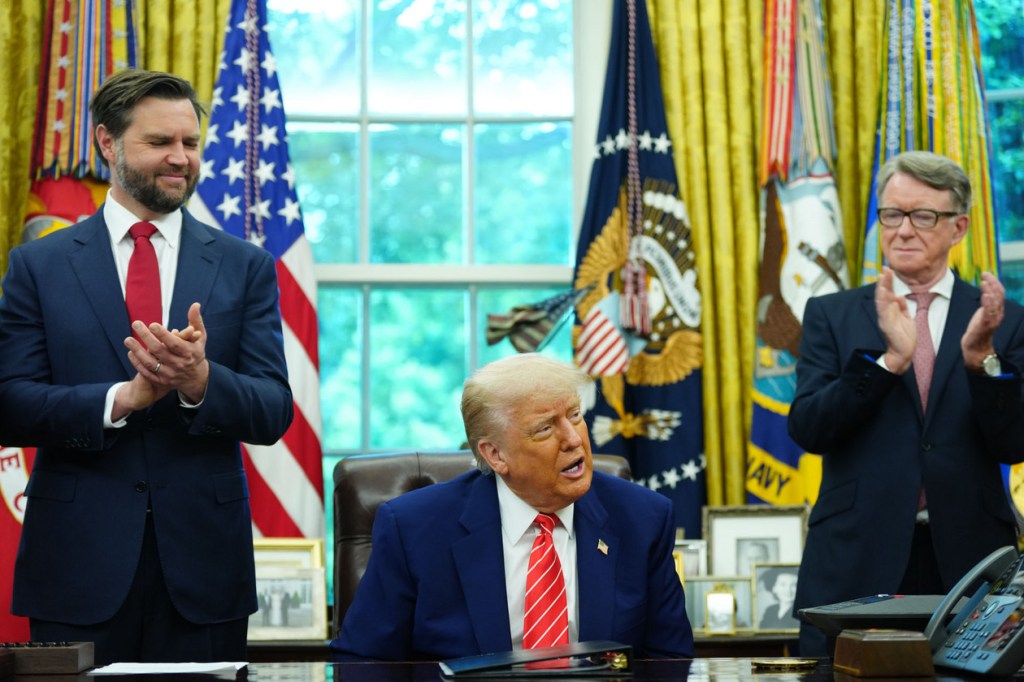
Photo 3: U.S. President Donald Trump talks trade from the Resolute Desk (Politico).
No artificial intelligence or machine translation programs were used in the creation of this post.