As part of a global trade war started earlier this month, U.S. President Donald Trump levied 24% tariffs on products coming in from Japan. Initially, there was shock and indignation in Tokyo at being treated so shabbily by a friend and ally. But after the initial sting wore off – even Israel got hit with 17% tariffs – the Japanese government shifted to formulating a response. Prime Minister Ishiba Shigeru, taking a page from Abe Shinzō’s 2017 playbook, moved quickly to call the U.S. president. He wanted to convince Trump to delegate trade negotiations down to the ministerial level. Above all, the Japanese PM wanted to keep economic and defense issues separate.
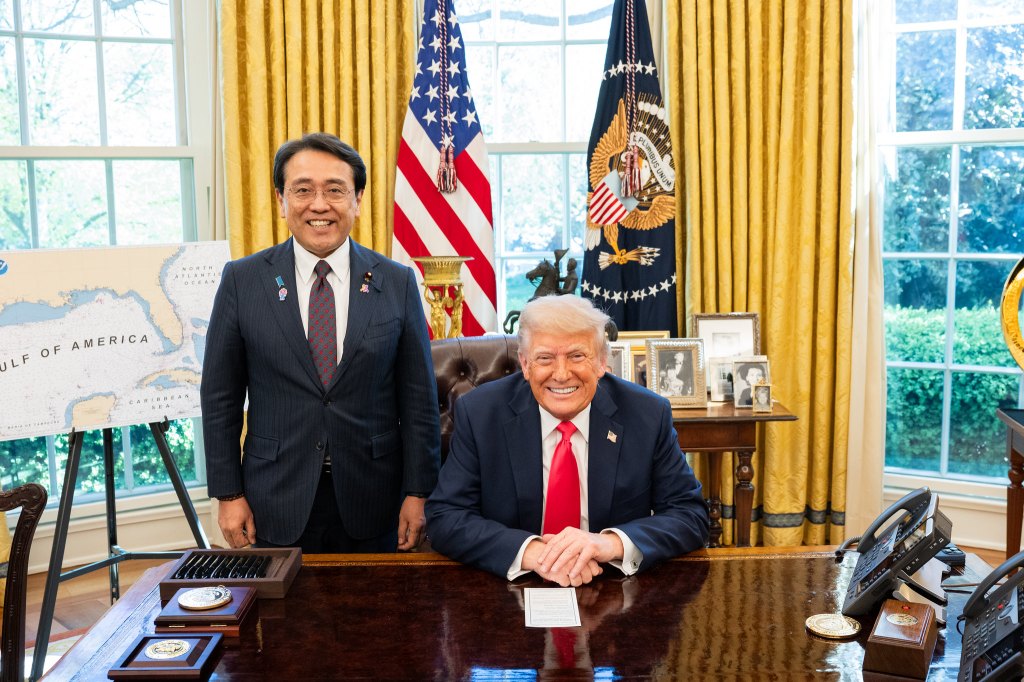
Perhaps he moved too quickly. Trump immediately agreed and appointed Treasury Secretary Scott Bessent as U.S. tariff negotiator, catching the Japanese PM flatfooted. Ishiba had to scramble to tap his minister of economic revitalization, Akazawa Ryōsei, who he then dispatched to Washington. On April 16, Akazawa met with Bessent and U.S. Trade Representative Jamieson Greer. But in a surprising departure from diplomatic protocol, Trump proactively exerted his presence over the meetings.
Then, on April 25, Ishiba’s finance minister, Katō Katsunobu, met with Bessent on the sidelines of the G20. There was much speculation about whether the U.S. had pressured Japan to strengthen its currency, given Trump’s comments on how a weak yen was hurting America.
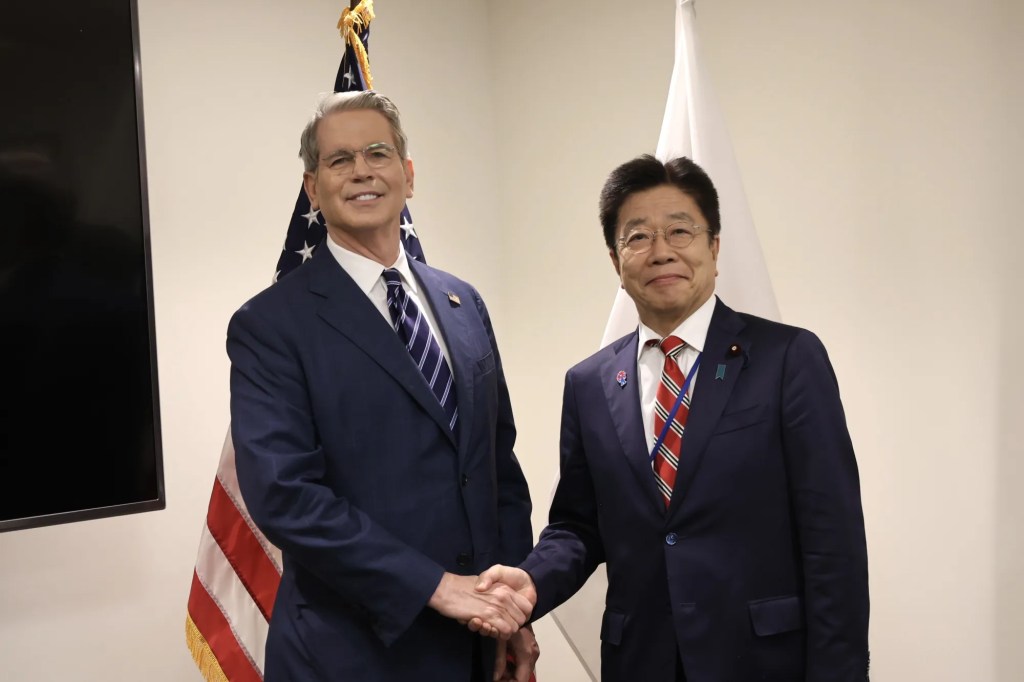
Now there are rumors that, going forward, Katō and other members of the ruling Liberal Democratic Party (LDP) are likely to play bigger roles in the trade negotiations.
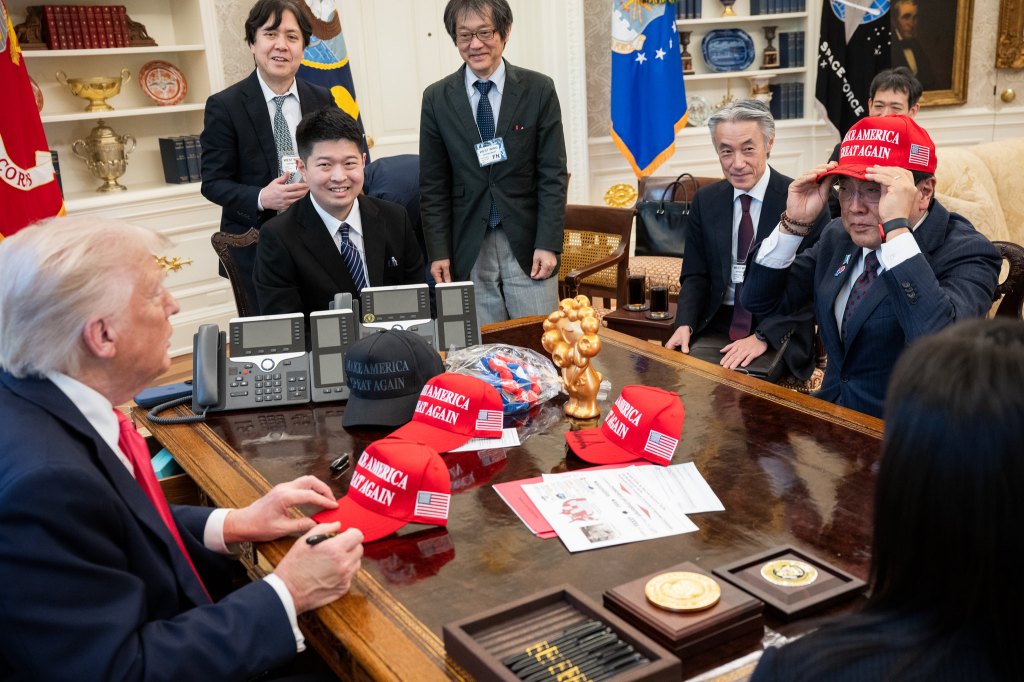
Besides looking outgunned during his meetings with Trump, Akazawa angered LDP leaders by consulting colleagues outside the prime minister’s circle. Footage of Akazawa donning a red MAGA hat in the Oval Office didn’t help. An opposition leader derided the episode as “tributary diplomacy.” (As of now, Ishiba is still standing by his envoy, and plans to dispatch him again next week.)
But back to the meetings, it is not exactly clear what demands Trump officials made to Akazawa and Katō. Japanese officials continue to paint an upbeat picture of honest and constructive talks. But what do Tokyo insiders really think about the situation?
Defense, and defense against tariffs
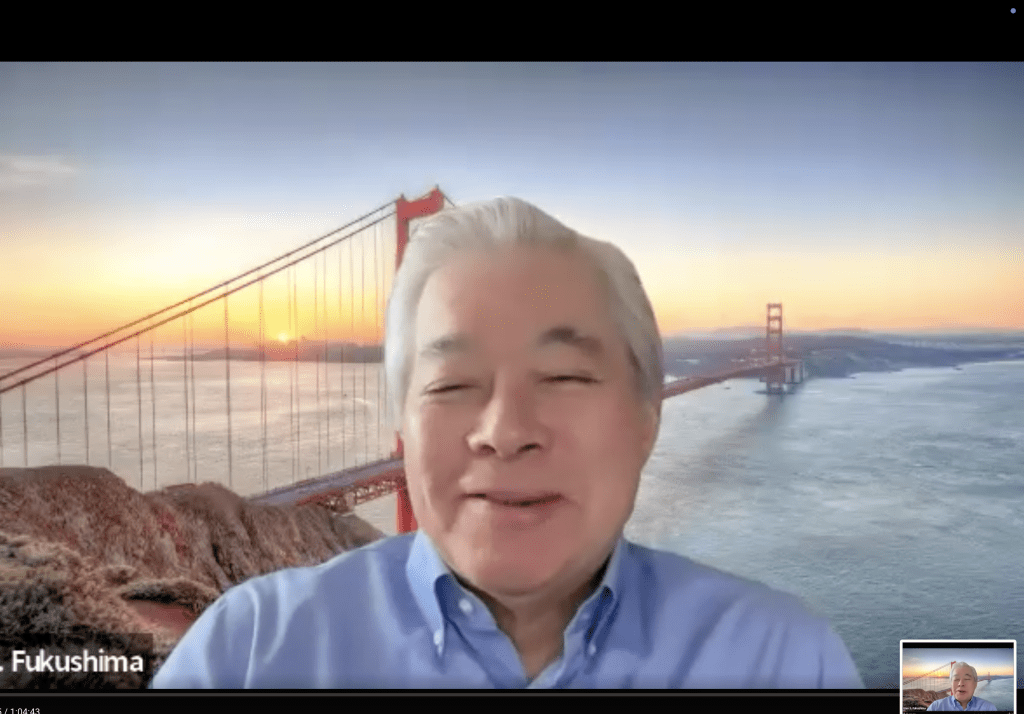
Kiuchi Takahide, an international trade expert and executive economist at Nomura Research Institute (NRI), recently commented on the negotiations in articles and TV appearances. He thinks the Trump tariffs are here to stay, especially for countries that have large trade surpluses with the United States.
Negotiations with Trump officials – just bilaterally – are “unlikely to result in big tariff reductions for Japan.”
Kiuchi Takahide
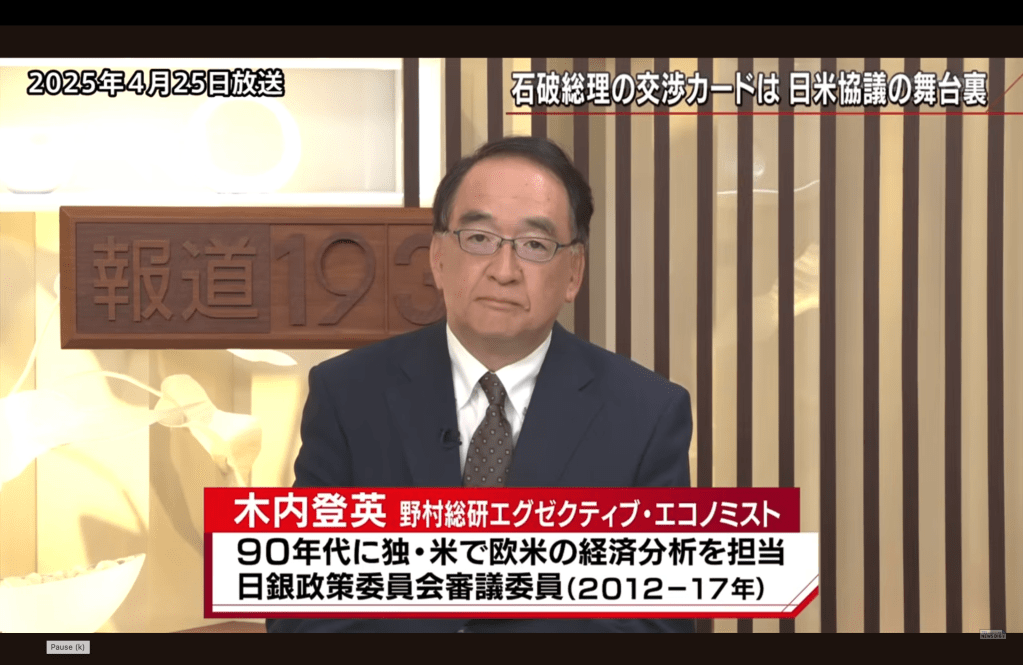
America’s trade deficit with Japan currently stands at approximately $63 billion. Kiuchi says unless Japan is willing and able to very quickly and drastically shrink that gap, negotiations with Trump officials – just bilaterally – are “unlikely to result in big tariff reductions for Japan.”1
Kiuchi does not seem confident the Ishiba administration could safely shrink the gap, even if it wanted to. He also thinks Trump is pressuring Japan heavily because he views it as most pliable. Trump knows Japan is vulnerable in the defense/security realm, making the potential threat to withdraw U.S. bases all the scarier.
But Kiuchi says Japanese negotiators should hold fast against American demands on trade and currency rates. In his view, giving in too quickly will cause a lot of damage to Japan’s economy. He also says the negative effects of Trump’s trade war will eventually force U.S. negotiators to soften their stance. This is especially true if global financial markets start taking a dive, or if voter dissatisfaction in the U.S. threatens GOP prospects for the mid-term elections.
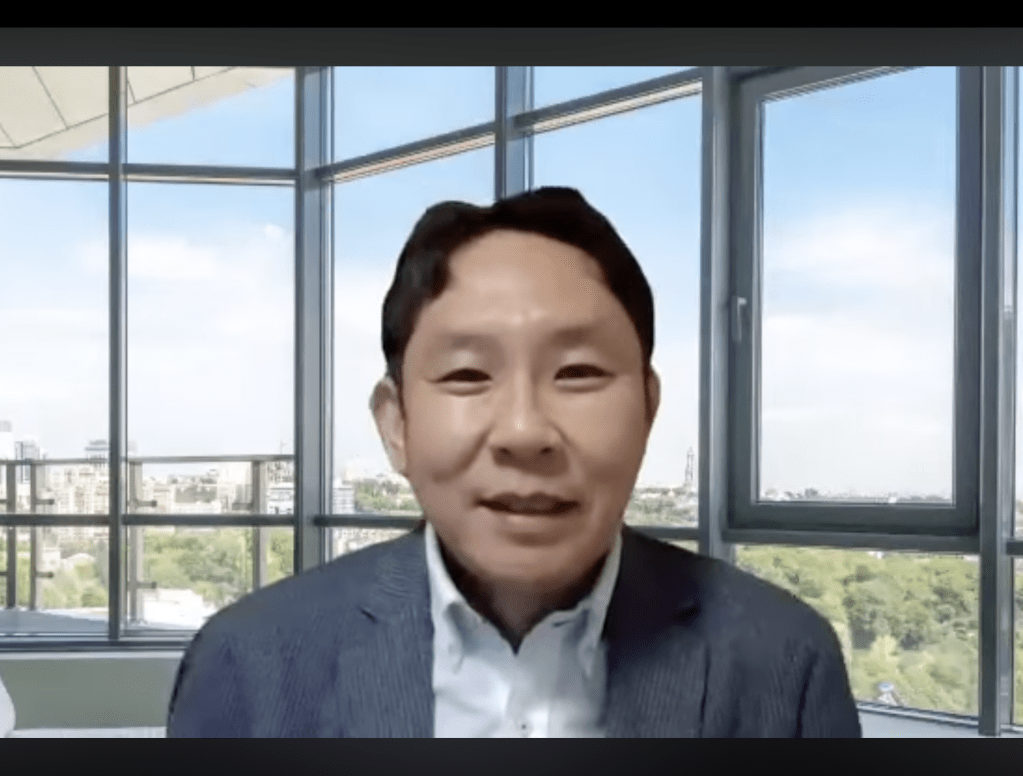
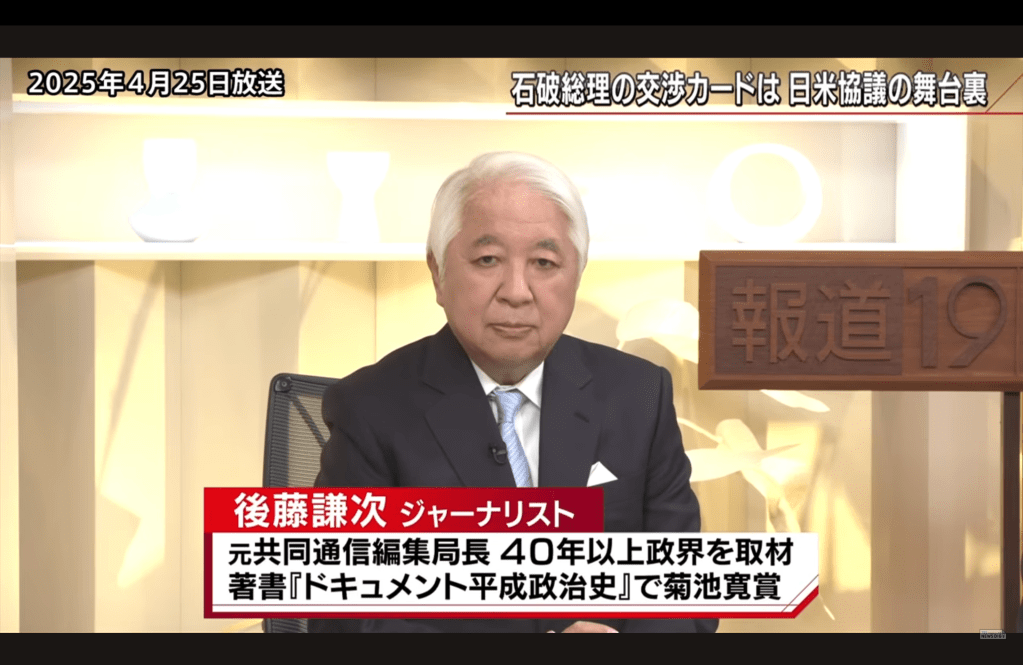
Others have highlighted how vital a good outcome with Japan is to the Trump administration. Gotō Kenji, a former Kyodo reporter and political commentator for Diamond Online, recently commented how Trump wants to secure a good deal with Japan to set the tone for subsequent negotiations with other nations.
Japanese negotiators “have to cut trade talks away from defense/security. And they have to not anger Trump.”
Gotō Kenji
Gotō also points to Ishiba’s domestic considerations. Opposition parties are likely to use populist measures against Ishiba in the run-up to an important Upper House election in July. These measures include reducing or doing away with Japan’s consumption tax, an idea that polls well but is bad for government finances.
It is unclear how Ishiba might protect his premiership against such an attack.
As for what to watch for, Gotō referred to Akazawa’s next trade negotiation scheduled for later this week. It’s a do-or-die moment for the Japanese negotiator, with all eyes on what concessions he has been authorized to offer. Gotō sums up the Japanese side’s dilemma as follows: Japanese negotiators “have to cut trade talks away from defense/security. And they have to not anger Trump. These two points will, for now, form the crux of Japan’s course of action.”2
Other developments to look for
The above observations are cogent and timely, but here are a few more possible developments that could shape the outcome:
(1) U.S. pushes for big ag purchases
Back in 2019, a year after he first started his trade war with China, Trump was pleased when Abe agreed to buy more U.S. agricultural products. It would not be strange if his negotiators pressed for such a deal again, to offset MAGA pain as China retaliates even more against American soyabean and corn farmers.
(2) President’s staff churns
Trump is under pressure to score big wins, and quickly. Nevertheless, his White House is characterized by chaos and infighting. A recent outburst between Bessent and DOGE head Elon Musk is a good example of this. Such incidents cast doubt on whether the president’s team can exhibit the discipline and cohesiveness needed for negotiations like these.
(3) Degree of U.S. arm-twisting
During his first term Trump put immense pressure on then-PM Abe, culminating in a 2019 trade agreement that Japan never really wanted. These recent tariffs fly in the face of that deal, with many wondering if America’s word can even be trusted anymore. What’s the point of making painful concessions if the agreement will just get trashed a few years later?
The simple fact is this: Japanese leaders and diplomats smile in front of the cameras, but they resent it when American counterparts run roughshod over them. And leaders like Ishiba cannot keep caving to American demands without suffering consequences at home. So, it is possible more Trumpian arm-twisting will work in the short-term. But in the long run, it is likely to harm the foundation on which the alliance was built. Not to mention America’s standing in the region.
– – –
1Kiuchi, Takahide. 2025. Trump Administration to Issue Reciprocal Tariffs (トランプ政権は相互関税を発動へ). Nomura Research Institute (NRI) website. 9 April 2025. 「日本の関税の大幅見直しは2国間交渉では実現しにくい。」
2Gotō, Kenji. 2025. Behind the scenes of the Japan-U.S. tariff negotiations (日米関税交渉の舞台裏). Hōdō 1930 interview on 25 April 2025. 「そこで安全保障はとにかく切り離さないとダメだ、と。で、トランプ大統領を怒らしちゃダメ。この二つが当面の日本の…方針だと。」
Photo 1: Japanese tariff negotiator Akazawa Ryōsei stands by U.S. President Donald Trump in the Oval Office on April 16, 2025 (White House Flickr).
Photo 2: Treasury Secretary Scott Bessent meeting with Katō Katsunobu on April 25, 2025 (The Japan Times).
Photo 3: Akazawa dons a red MAGA hat in the Oval Office (White House Flickr).
Photos 4 & 5: Kiuchi Takahide and Gotō Kenji on a panel April 25, 2025 (Hōdō 1930).
No artificial intelligence or machine translation programs were used in the creation of this post.