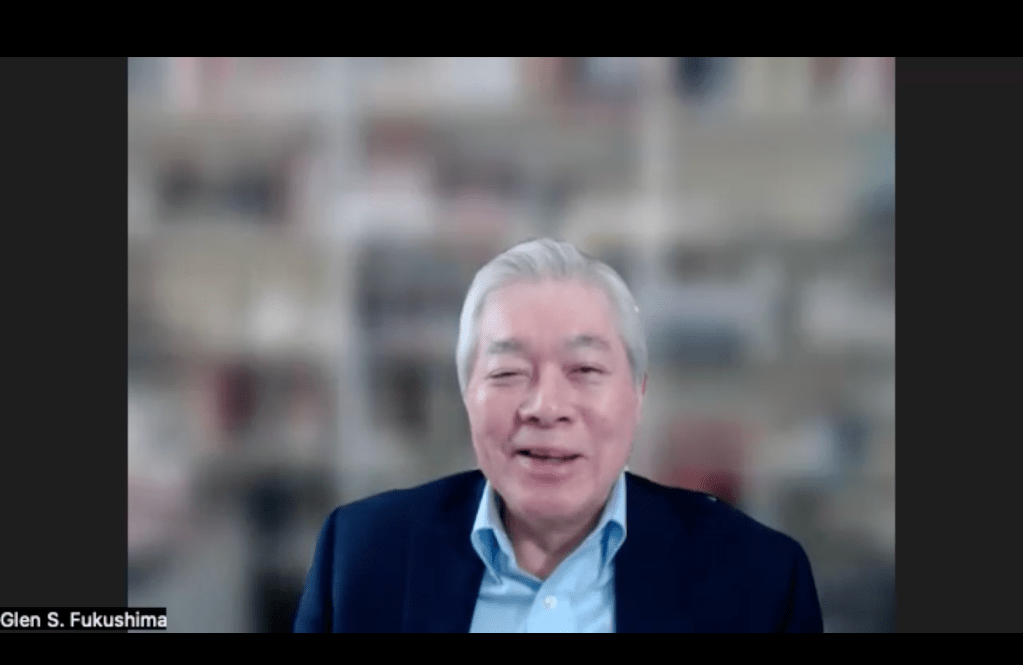
This is a continuation of Part 1 of our interview with Glen S. Fukushima recorded on Dec. 17, 2024 (transcript below):
– – –
(Kafatos): There are discussions in Japan where some think they should pull away from the United States. Do you think there are strong arguments to be made for Japan sticking by the U.S.-Japan alliance and strengthening it? Or is it time for Japan to hedge its bets?
(Fukushima): The two are not mutually exclusive. Japan can strengthen its relationship with the U.S. while also trying to strengthen its own capabilities. That’s probably what’s being done right now.
Observers point out that Japan is waking up to the realities of the dangerous environment it’s in, primarily three factors: First, North Korea and its missile and nuclear development. Second, China with the Senkaku Islands and military buildup, and economic sanctions. And third, more recently, the war in Ukraine, and the view that “Today’s Ukraine is tomorrow’s Taiwan.” They say these factors are behind Japan’s decision to significantly increase its defense expenditures, allow for strike capabilities, and take a more active posture in terms of military security. That’s all true.
But another important factor is the question in Japan, especially since 2016, about whether the U.S. can be relied upon, the way postwar Japan has relied on the United States. That recent doubt is a fourth factor and, in many ways, perhaps the most important factor, behind Japan’s realization that it needs to increase its own defense capabilities.
Back during the Persian Gulf War days in 1990-1991, Americans were telling the Japanese, “Boots on the ground! You gotta show the flag!” There was tremendous pressure on Japan to engage not only in “dollar diplomacy” – Japan contributed $13 billion to the war effort – but to also send troops. Those Americans, particularly Republicans, have been advocating for the relationship between the U.S. and Japan to be comparable to that between the U.S. and Britain. From their standpoint, these new defense initiatives by Japan are quite positive. And I think given the dangerous regional environment, it behooves Japan to strengthen its defense.
“The results of the 2016 election caused many people in Japan to rethink the security relationship with the United States.”
Glen S. Fukushima
We’re coming up on the 80th anniversary of the end of WWII. For the first 40 or 50 years of the postwar period Japan was profoundly traumatized by the results of that conflict. There was an understandable desire of not wanting to engage in war ever again, and wanting to rely on the U.S. for defense to avoid another military build-up that contributed to past mistakes. Now with generational change and the passage of time, and the four factors we discussed, Japan is moving toward strengthening its own defense capabilities. But that doesn’t preclude enhancing cooperation with the United States.
(Kafatos): But the GOP, that party of those “gotta show the flag” Americans, has changed. It seems American diplomacy is now more transactional.
(Fukushima): Yes, I think the results of the 2016 election caused many people in Japan to rethink the security relationship with the United States. During the Cold War, the governments of the U.S. and Japan were largely aligned, even though there were protests in Japan, such as in 1960 against renewal of the U.S.-Japan Security Treaty. But Japan was clearly in the U.S. camp during the Cold War. The notion was always that the U.S. would provide the nuclear umbrella and defend Japan if it was attacked.
(Re: Obama’s “U.S. is not world’s policeman” speech)
Glen S. Fukushima
“Why strike fear into the hearts of our allies and have them think we are no longer reliable?”
But I don’t want to sound too partisan here. Actually, when Barack Obama was president, he drew a bright red line in Syria saying that if they used chemical or biological weapons, the U.S. would respond. Well, Syria did cross that red line, and the U.S. did not respond. And then he went out of his way to declare the U.S. can no longer be the world’s policeman. My own view is, in reality, that’s true, but there’s no reason for the President of the United States to say that. Why strike fear into the hearts of our allies and have them think we are no longer reliable?
Before Obama we had the opposite extreme. The George W. Bush administration went overboard in attacking Iraq without finding any weapons of mass destruction. And in reaction to that, the Obama Administration and the American public said we shouldn’t engage in these endless wars, especially since we have so many problems domestically – economic problems, social problems, opioid addiction, alcoholism, all sorts of problems. The sense was, “Why should we be wasting our precious money on these other countries?”
This was in response to the many wars the Bush administration engaged in, and Obama reflected this. And then it was further reinforced by President-elect Trump, who recently said, “Syria is not our problem, they should take care of themselves.”
It’s clearly true that the Republican Party now, which is pretty much the Trump Party, is very different from the party of the Reagan and Bush years. Many people in Japan, especially in the LDP, think fondly back to the Reagan-Bush years. They felt Republicans stood for free trade, anti-communism, anti-terrorism, and a proactive foreign policy. That was the Republican Party the Japanese Establishment came to know and love.
(Kafatos): What has underpinned the U.S.-Japan alliance for so long is relations between the two peoples. You made a considerable donation to Fulbright Japan partly out of concern the people-to-people exchanges were on the decline. What is the state of relations between Japanese and Americans today?
(Fukushima): Next year will be the 80th anniversary of the end of WW II. The relationship between the two countries has prospered and been mutually beneficial in the postwar era. But one area in which I do have a concern is the number of Japanese students coming to study in the U.S., which has really declined.
The peak was 1997, when Japan ranked first for number of students it was sending to the U.S. for at least one year of study at the college level. There were more than 47,000 Japanese students a year studying here, the most of any country. Now, I think Japan ranks 12th for number of students it sends to the U.S., with only about 11,500. Students from China, India, South Korea, and Vietnam have all increased. Even Nigeria just surpassed Japan. South Korea, with less than half the population of Japan, has more than three times the number of students studying in the U.S.
In 1997, Japan ranked 1st for number of students sent to study in the United States. Now it ranks 12th.
There are a number of reasons for this but one is how expensive it is to study here. I was at a conference last year in Tokyo sponsored by Columbia University, and the president of Tokyo University was also there. It was pointed out by a Japanese professor who used to teach at Tokyo University that the tuition differential between the two universities for undergraduate is 17 times. The tuition at Columbia is something like $85,000 and at Tokyo University around $5,000. That price differential is a huge factor. But the price factor is something that affects all countries, not just Japan. Despite how expensive it is there are still lots of non-Americans coming here to study, so cost is only one factor.
But another big factor – pointed out by Drew Faust, president of Harvard, when she visited Japan in 2010 – is how overseas education is valued in Japan. She said Harvard did a study over the previous ten years – between 1999 and 2009 – of foreign students studying there, and found that of the top ten countries sending students to Harvard, nine had more students studying at Harvard in 2009 compared to 1999. The only exception was Japan, which had gone from 150-something students down to 105. In contrast, the number of students from China had doubled, from South Korea had tripled, and there were only five undergraduates from Japan at Harvard College at that time.
The conclusion was that, even if Japanese students did really well studying abroad at a selective university, they were not rewarded for it upon returning home. In some cases, the time spent abroad was even a mark against them in the eyes of potential employers. So, from Faust’s point of view, Japanese students were only acting in their rational self-interest. If they’re not going to be rewarded, why go abroad to study?
“The number of Japanese students studying in the U.S. has really declined.”
Glen S. Fukushima
Now, over the last 10 to 15 years things have changed. Parents, especially mothers, are more receptive to letting their children, especially their sons, to take a risk and go abroad. The other development is that certain Japanese businesspeople like Son Masayoshi of Softbank and Yanai Tadashi of Uniqlo have provided scholarships to study abroad, as has the Sasakawa Peace Foundation. These are full scholarships for Japanese high school students who have been accepted by certain universities in the U.S. and Britain. Now, for these three programs it’s fewer than a hundred students per year, but it’s still a significant development.
Nevertheless, looking at the overall picture, the number of Japanese students studying in the U.S. has really declined. It’s one of the reasons I made a contribution to Fulbright Japan, to encourage both Japanese students who want to study abroad and Americans who want to study in Japan.
(Kafatos): Many Americans go to Japan through the Japan Exchange Teaching Program (JET) run by the Japanese government. Do you think the U.S. government is doing enough to facilitate exchange the other way, to get Americans to go to Japan?
(Fukushima): The JET Program is one of the most successful exchange programs Japan has ever undertaken. The long-term effects have been quite positive for Japan. But I think it’s difficult for governments to do very much. So much of it has to do with the content of the education and the financial requirements. For Japanese going to the U.S., the content is very attractive but the price is very high. For Americans going to Japan, the price is not that high but the content varies a lot.
In most cases, in order to fully benefit from a Japanese education, students need to speak Japanese. In the past decade or two Japanese universities have increased course offerings in English, but these are still rather limited and of uneven quality. And the benefits to American students are also limited, unless it’s a specific field for which Japan is quite advanced. Maybe disaster prevention, seismology, or certain areas of public health.
Or railroad management. Japan is years ahead of the U.S. when it comes to trains such as the Shinkansen, the bullet train. Recently there was a study showing the average delay for the bullet train in any given year is 54 seconds. Compare that to Amtrak! So if you want to learn about railroad management, going to Japan is much better than studying in the United States.
“If Japanese universities increased the quality of their course instruction, especially in English, that would be a way to attract more Americans to study in Japan.”
Glen S. Fukushima
But more broadly, the course offerings for Japanese in the U.S. are far better than the other way around. In the Fulbright program, there were four or five Japanese who studied in the program and later got the Nobel Prize in science. Put another way, if Japanese universities increased the quality of their course instruction, especially in English, that would be a way to attract more Americans to study in Japan.
In various surveys of the quality of universities around the world, unfortunately, Japan doesn’t rate very high. The University of Tokyo, Kyoto University, Waseda, Keio, these generally rank in the top 100 or 200. But the universities in the U.S. and Europe – and increasingly in Asia (Chinese, Indian, and Singaporean universities) – are really increasing in terms of their ranking. Partly because they do offer courses in English and partly because they have more scholars from around the world who come to teach.
(Kafatos): Heading into 2025, what milestones and developments will you be keeping an eye on?
(Fukushima): Both the U.S. and Japan have uncertainties on the political side. Here in Washington, D.C., everyone is scrutinizing the new Trump appointees and nominees. People are wondering whether these people will be confirmed by the Senate, and what policies the Trump administration will implement. President-elect Trump is someone who says a lot in his speeches and his interviews. But no one knows for sure what he will actually implement.
For instance, immigration. He talks about the mass-deportation of undocumented immigrants. Is that going to be 11 million? 13 million? One million? It’s not clear. It’s also uncertain how much the legal system will allow him to do. And it’s not clear how much he’s going to focus on domestic versus foreign policy. Trump has a lot of things he wants to do, such as cutting taxes for individuals and corporations, and cutting back on regulations.
He wants to get rid of the Department of Education, he wants to get rid of the Deep State. He has DOGE – the Department of Government Efficiency – to be run by Elon Musk and Vivek Ramaswamy, which is supposed to cut trillions from the U.S. budget. He wants to cut personnel, cut agencies, but how much will actually happen is not clear.
On the foreign policy side, Trump has said he’s going to immediately fix the Russia-Ukraine conflict and the Israel-Hamas conflict. What he’s going to do or how that will play out is not clear. So, on the U.S. side, there’s a lot of uncertainty.
“There’s a lot of uncertainty in both the U.S. and Japan, but thankfully there are no huge problems right now between the two nations.”
Glen S. Fukushima
On the Japanese side, Prime Minister Ishiba has to pass the budget in the March-April 2025 timeframe. There is also the Upper House election coming up around July. Some doubt he will be able to serve as prime minister for very long. Will he be PM when the election is held in July? If he has to step down, who will replace him? In the last LDP presidential election there were nine candidates, more than ever in the recent past. To what extent will Ishiba focus on domestic versus foreign policy?
Because he was minister of defense and he now has a lot of Ministry of Defense people around him some think he will place a lot of emphasis on foreign policy. He has said things, such as wanting to revise the status of forces agreement with the U.S. (SOFA), and he has advocated an Asian version of NATO. These are not widely supported ideas so how they’ll turn out is also unclear.
There’s a lot of uncertainty in both the U.S. and Japan, but thankfully there are no huge problems right now between the two nations. There are some small problems, like the U.S. Steel/Nippon Steel issue, but not any big ones. In fact, from the standpoint of both countries, on the military security side, the political side, and on the economic side, there’s a great need by both sides for cooperation.
I am encouraged that, regardless of the political uncertainties in each country, there are enough issues in which each side feels it’s in their own self-interest to cooperate with each other. I am hopeful such cooperation will outweigh any conflicts or problems that may arise.
– – –
More information on Glen S. Fukushima and his many achievements can be found in his bio at the Center for American Progress, his listing on the Securities Investor Protection Corporation (SIPC) website, and on his Wikipedia page. The Japan Lens thanks him for his valuable time and insights.
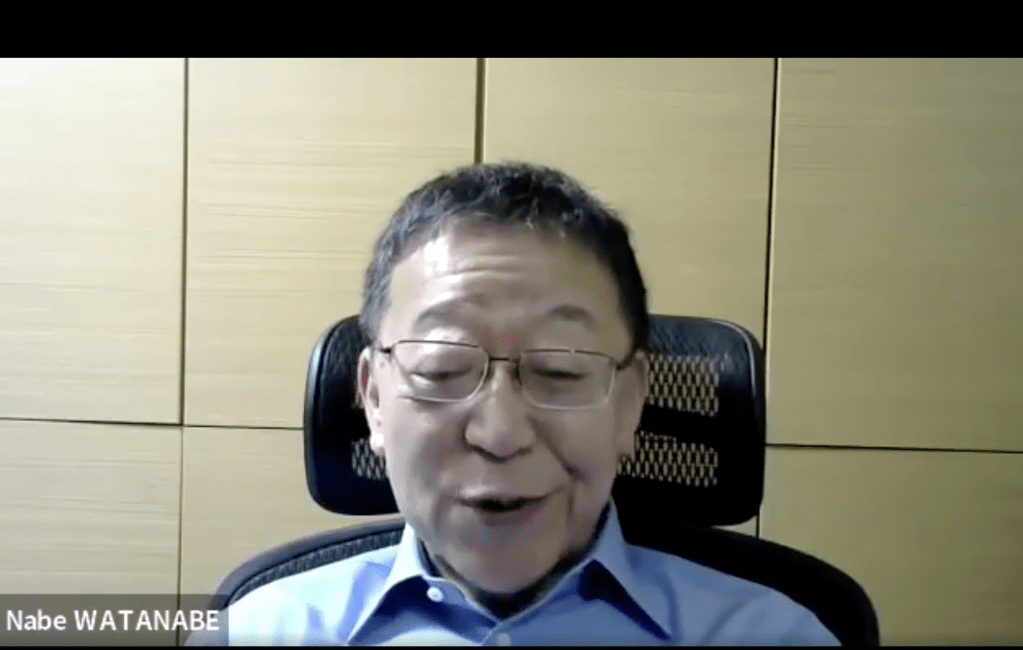
Photo 1: Glen S. Fukushima during his interview with the Japan Lens on Dec. 17, 2024.
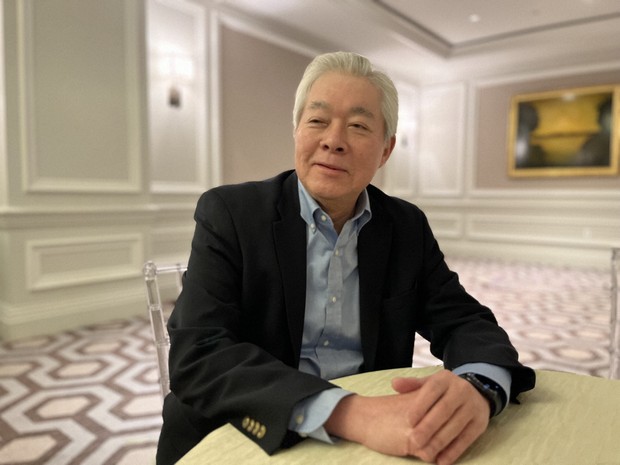
Photo 2: Mr. Fukushima during an interview in Japan on Dec. 31, 2024 (Mainichi Shimbun).
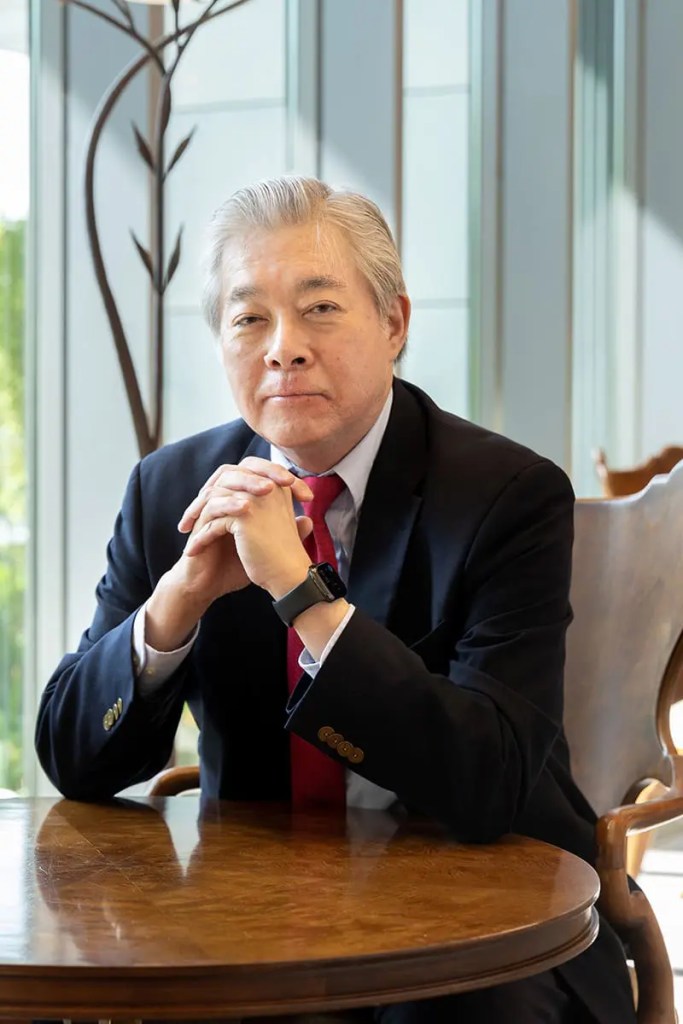
Photo 3: A photo of Mr. Fukushima from his bio (SIPC).
No artificial intelligence or machine translation programs were used in the creation of this post.
 The Japan Lens
One response to “Interview with Glen S. Fukushima (Part 2): How healthy is the U.S.-Japan alliance?”
[…] here for Part 2 of the interview with Glen S. […]
LikeLike