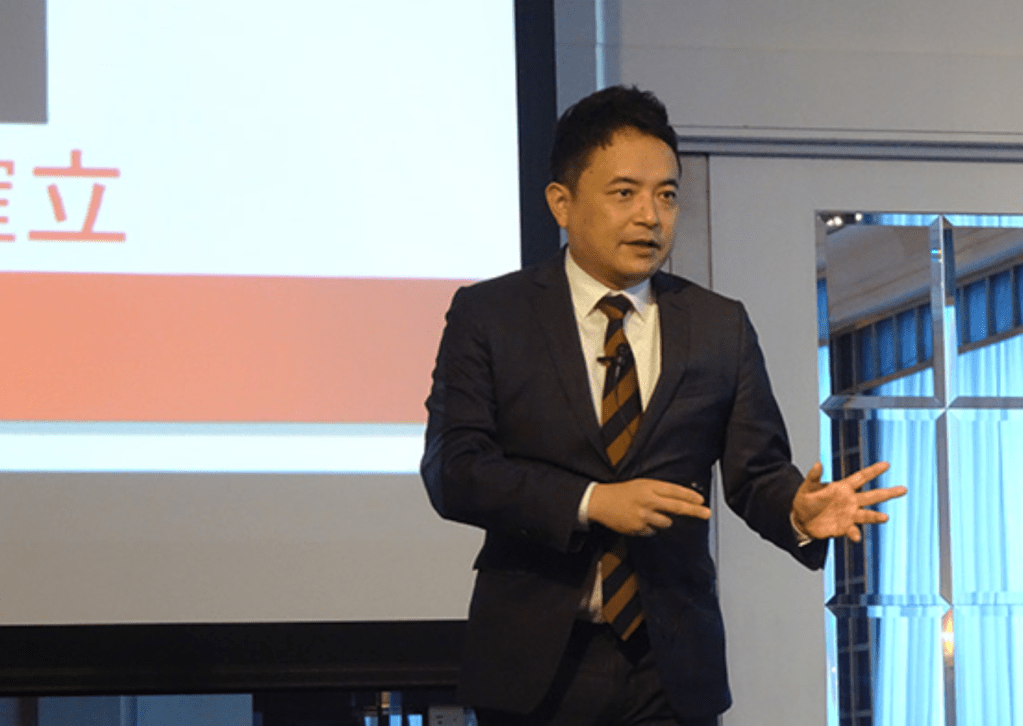
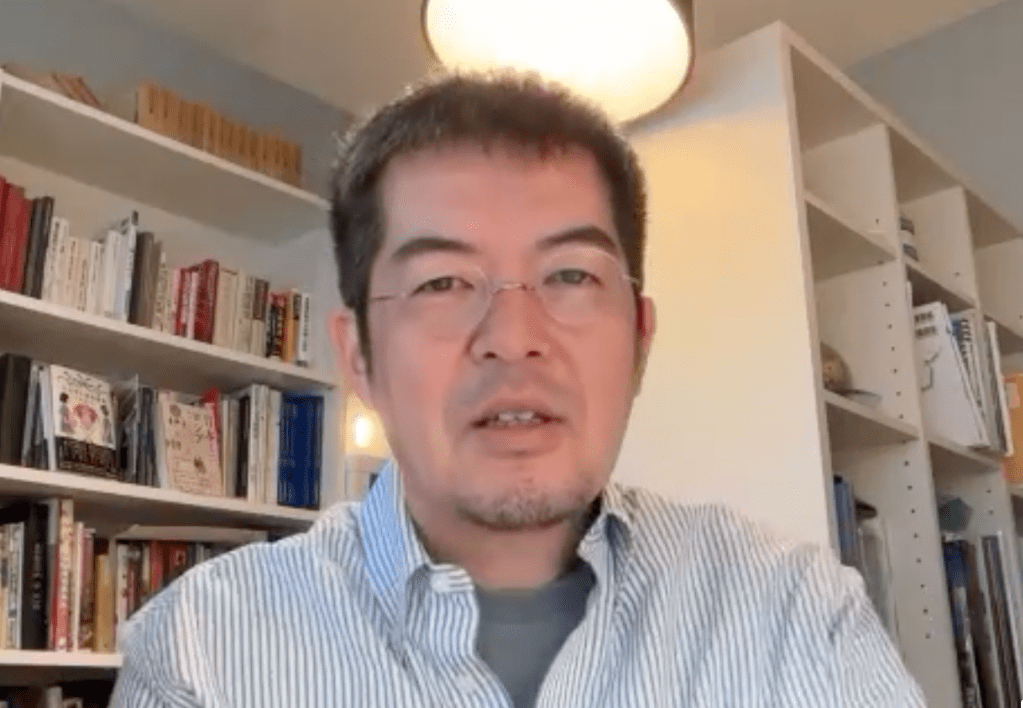
In Part 1 of the interview, Prof. Minemura explained why working together with partner nations such as the Philippines is so crucial. There is this video (audio in Japanese only) or the English transcript below, where the discussion picks up where we left off. (Japanese transcript also available.)
– – –
(Kafatos): The U.S. military planners you mentioned, the ones who tend to see only black or white, they’re struggling to counter China’s gray zone tactics. Perhaps partnering with countries like the Philippines can boost deterrence?
(Minemura): Absolutely. Earlier it sounded like I was just criticizing the U.S. military but actually the Japanese Self-Defense Forces (SDF) are the same. I give lectures at the SDF and have noticed they also seem to gravitate toward the military invasion-type scenarios, especially the officer corps. That’s their specialty so that’s what they’re used to, but it’s not right to focus on those exclusively. The main scenario being contemplated in Japan is one where the People’s Liberation Army (PLA) simultaneously invades Taiwan and the Senkaku Islands. Retired SDF officers go around talking about this. But I’ve spent many years reviewing internal Chinese documents and watching their military exercises. I’ve never seen anything that would indicate they’re planning a simultaneous attack on Japan.
“What is China’s strategic objective when annexing Taiwan? Keeping America out of the fight. That means preventing them from using their forces stationed in Japan.”
Prof. Minemura Kenji
Of course that doesn’t mean we should ignore the possibility, but it’s wrong to prepare as if that’s the main scenario. And, the fact is, this type of massive invasion scenario U.S. and Japanese planners are focusing on is the easiest one for them to handle. If the Chinese military attacks the Senkakus then the Japanese SDF can mobilize on the principle of collective self-defense. Article 5 of the U.S.-Japan Defense Treaty comes into play, and the U.S. can commit to the fight. It’s pretty cut and dry.
But let’s think about it: What is China’s strategic objective when annexing Taiwan? Keeping America out of the fight. That means preventing them from using their forces stationed in Japan. If that’s the case, it makes no sense for them to attack the Senkakus. That would harm their primary objective, so I think it’s pointless to just contemplate the easy scenarios. We must consider the gray zone scenarios, and a very light gray at that.
I give various speeches and lectures, I go to the U.S. to talk, and I always drive home this point: it’s meaningless to look at this from our own point of view, of what’s reasonable or possible from our perspective. We have to ask ourselves, “What’s logical from the Chinese perspective? What’s the Chinese way of thinking? What’s Xi Jinping’s way of thinking?” If you don’t do that, it’s meaningless.
Liu Mingfu, Xi Jinping’s top strategist, wrote in his book what they intend to do. And if you look at the parts of Liu’s book that were censored, you can see this (non-military maritime blockade) scenario I put forth is really possible.
When it comes to China issues, Japan is closer than America. We’re closer geographically and culturally, and we both use Chinese characters to write in our languages. One of the tools we can provide to strengthen the U.S.-Japan alliance is research on China. That’s why we research, so we can present our findings and hopefully aid in the U.S. furthering its commitment to the region. In the truest sense, I think that’s what alliance strengthening is all about.
I started researching the possibility of a Taiwan contingency back in 2005. In terms of most experience researching Taiwan contingencies, I rank second in the world. First place goes, of course, to Xi Jinping (laughs). I want to get the word out to the best of my ability, and I intend to keep on with my research.
(Kafatos): In the Bungei article mentioned earlier you commented on the upcoming U.S. presidential election and – from the perspective of Taiwan’s fate – that it doesn’t really matter whether Biden or Trump wins.
(Minemura): Perhaps Americans don’t want to hear this but U.S. hegemony is wobbling. Some say the turning point was the rise of President Trump. Me, I don’t think so. Before there was “America First” there was what President Obama said in 2013, which was “America is not the world’s policeman.” My analysis indicates that’s when American hegemony started wobbling. After he said that, we saw Russia annex Crimea. And China started building artificial islands in the South China Sea.
When the U.S. was the sole superpower it had the ability to fight wars on two fronts. But if you look at America’s fighting power today, such as its aircraft carriers, fighting a two-front war would be really hard. Deterrence on the European front has now collapsed with the Russian invasion. Deterrence on the Middle East front has collapsed with the Israel-Hamas war. The U.S. has reached its limit. I recently spoke with some officials at the Pentagon and they acknowledged it’s a tough situation.
That being the case, if China intends to start a war in or around Taiwan, the U.S. will struggle to deter it. I think China’s overarching calculus won’t change regardless of who wins the U.S. election. Right now, U.S. deterrence in East Asia has dropped significantly. My read is, this situation won’t improve for a while.
But the single difference for China between Biden and Trump is this: Biden places importance on alliances. Japan, Australia, the Philippines, I think he’ll strengthen those alliances. And yet, have Biden’s defense policies been really that great? I don’t think so. Those two fronts of deterrence collapsed. It’s hard to conclude the Biden administration gets a passing grade in diplomacy or defense policy.
“I think it’s a fact: Chinese officials believe it’ll be easier to control Trump. On the other hand, … I think Xi Jinping would prefer to see Biden win.”
Prof. Minemura Kenji
What about with Trump? In a word, he’s unpredictable. Alliances are likely to be shaken. This is a man who likes making unexpected deals. Honestly, with him there’s a big element of unease. But during his first presidency I think he was right to pursue his “peace through power” policy. He tried to rebuild the military and increase the number of ships. His approach of maintaining peace by increasing military strength was spot-on, in my opinion.
(Kafatos): Who does President Xi want to see as president?
(Minemura): That’s a tough one. I get asked this all the time. Generally speaking, both men have troublesome elements for China. Either way, the standoff with America is going to continue for a long time. Professor Michael Pillsbury referred to China’s “100-year marathon,” where they plan to stand tough against the U.S. for the next century. I doubt that stance will change much regardless of who is in the Oval Office.
But setting that aside, who’s the best choice – or perhaps the worst choice – for the Chinese? I think you can separate that into two parts. From the perspective of Chinese government officials, they probably prefer Trump. Reason being, the one thing they fear most is alliances. They’re paranoid about multiple countries coming to attack them. It’s something they really fear. Under a Biden administration, you have this newly formed Quadrilateral Security Dialogue, or the Quad. There’s the newly formed AUKUS and IPEF as well. These are complex alliance structures built to contain China so, from their perspective, they really don’t like that. Rather, when Trump says he’ll negotiate with China bilaterally, many on their side prefer that. It’s easier to bring Trump some kind of deal.
I have an anecdote that illustrates this point. It was during the first Trump presidency when I was still a special correspondent in Washington, D.C. I was in the press corps that accompanied the president on his first Asia trip in 2017. During that visit, the Chinese clearly brought Trump deals totaling $200 billion to help reduce the trade deficit. They offered to make big purchases of U.S. aircraft, agricultural products, and energy – Trump was happy with that. Then they took him to the Forbidden Palace Museum, which was shut off to everyone else. Trump was over the moon. He was bragging later about how the place had 2000 years of history and they sealed it off just for him. So, I think it’s a fact: Chinese officials believe it’ll be easier to control Trump.
On the other hand, what is President Xi thinking? Personally, I think Xi Jinping would prefer to see Biden win. I’ve run various profiles on him and I think one of the things he hates the most is uncertainty. He really, really dislikes it.
I was accompanying the delegation to Mar-a-Lago in 2017 when the two leaders had their first summit. There was an incident there that was deeply unpleasant for President Xi. At first, there was a friendly atmosphere to the summit. Xi had this air about him, as if he was thinking, “Well, this Trump guy’s not so tough to handle after all.” And at the dinner, after they finished eating and chocolate cake was brought out for dessert, it was then that Trump turned to Xi and remarked casually, something to the effect of, “Oh by the way President Xi, I wanted to let you know…” Then he dropped it: “I just fired a bunch of missiles into Syria.” When Xi heard that he was completely stunned. Speechless. They say he froze for like ten seconds, and then he turned to the interpreter next to him as if to ask, “Wait, what? What did this guy just say??” I think Xi was completely blindsided by that, and it was a deeply unpleasant experience for him. But with Biden, it’s different. They’ve communicated a lot over the years so my take is Xi would prefer to deal with Biden.
I can analyze these occurrences from a pretty rare point of view. The things I saw as a correspondent inform my work in academia. And I have experience with both the U.S. and China, which not many people can say.
(Kafatos): Recently there’s a trend where many Chinese are moving overseas. There are more and more even in Japan. As these expats increase in number, is this a threat to the Chinese government? Will it have an adverse effect on their long-term strategy?
(Minemura): I’ve noticed that around me, too. It’s really on the rise. Things like rich Chinese buying apartment buildings in Tokyo. Also, foreign exchange students from China who say they’re not going back. I also have an American lawyer friend who says many Chinese are entering the U.S. from Mexico, and it’s hard to handle the inflow.
The biggest reason is the Xi administration’s crackdowns. Freedom of speech is pretty much gone, thought indoctrination is stringent, and people don’t like it. Many are leaving because they want freedom. I think we’ll see more of that going forward.
That said, does the Chinese government care? The answer is no. We’re talking about a population of 1.4 billion. Their attitude is, “You’re leaving? Fine, get out.” But government officials and people who handle state secrets, key personnel at state-owned enterprises and the like, those people are tightly controlled. They’ve had their passports taken, and the government is good at controlling them.
(Kafatos): What about Chinese spy activities? In the U.S., Chinese scientists and foreign exchange students are sometimes suspected of espionage. With both professional spies and the more “rent-a-spy” variety, what’s your take?
(Minemura): I’ve been researching Chinese intelligence for many years. A term I use to describe their spying methods is “casting a net.” Agencies like the CIA will send highly trained operatives to zero in on a target and get the intelligence. But the Chinese style of espionage – and this has been the case since before WWII – often involves using amateur spies like civilians and villagers. They cast a wide net to bring in lots of intel, and they hoover it all up. Then highly trained individuals sift through it for the catch. It really is like casting a net into the sea. You pull it up and it’s almost all sand and debris, but inside there’s a valuable fish here and there. It looks like an inefficient way of doing things but, after you put it all together, they’re able to gather massive amounts of intel. The Americans are right to crack down on this.
(Kafatos): So the Chinese government can use social media and apps such as LINE (popular in Japan and Taiwan). In one of your recent articles you said LINE has been compromised. Isn’t it hard to counter such tactics?
(Minemura): Social media like LINE and TikTok are the ultimate form of China’s net-casting spy technique. They hoover up lots of seemingly superficial data on everyone, wide and far. This is what China is really good at.
The problem is, LINE is really popular in Taiwan. In 2021, a hundred or so officials in Taiwan saw their data leaked from LINE. There’s a strong possibility China accessed vulnerable servers in Korea and stole the data. That’s why I’ve been saying since 2021 that LINE is dangerous. People in Taiwan think it’s a Japanese app so they think it’s safe. But it’s not, it’s Korean. And they’re being subjected to hacking attacks probably originating in China. LINE has to decouple from its Korea-side operations in order to defend against it. I don’t use LINE anymore.
(Kafatos): Do you have any last comments? Like what we should be watching going forward?
(Minemura): When talking about what might happen, I don’t use the words “Taiwan invasion.” Any number of gray zone incidents could occur so I use the term “Taiwan crisis” or “contingency.” It’s important to properly focus on the facts and evidence. Scenario planning has become something of a trend now in Japanese companies and the government. But quite a few are doing their scenario planning based on faulty information. The result is the opposite, they’re actually less prepared.
For Japan the worst case scenario is an attack on the Senkakus. But what is the worst case scenario for China? We have to analyze the facts and evidence from the standpoint of the Chinese side. Governments and researchers across the globe should be doing this.
If we don’t, we won’t be able to discern the truth about China. We won’t be able to read their intentions, and we certainly won’t be able to prevent a war. I strongly believe we have to do this.
– – –
Prof. Minemura Kenji is a former advisor to the late Prime Minister Abe Shinzō. He is also a senior researcher at the Canon Institute of Global Studies (CIGS) where he specializes in both U.S. and China defense policy. Prof. Minemura is known for his insightful translations of Chinese books and government documents, as well as his balanced and objective views. The Japan Lens thanks him for his valuable time and insights.
 The Japan Lens
One response to “Interview with Minemura Kenji: The Taiwan contingency scenario (Part 2 of 2)”
[…] (This concludes Part 1 of the interview. The original Japanese transcript is here. Next week we will post Part 2.) […]
LikeLike